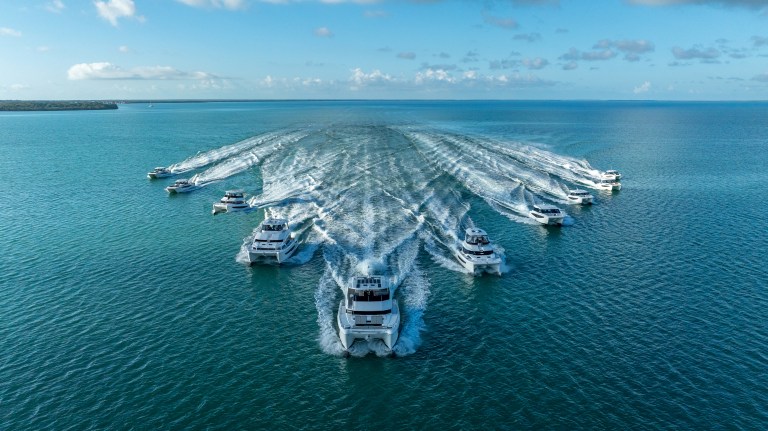

As senior vice president of government relations at the National Marine Manufacturers Association, Robyn Boerstling oversees the association’s advocacy efforts at the federal, state and international levels.
Boerstling was a long-time leadership team member at the National Association of Manufacturers, where she represented 14,000 members before Congress, the White House and multiple federal agencies with a special focus on transportation, infrastructure, technology, innovation, health care, immigration and workforce issues. Prior to her work at NAM, Boerstling worked within the U.S. Department of Transportation as director of congressional and public affairs at the maritime administration; special assistant in the Office of the Secretary for Public Affairs; and counselor to the assistant secretary for transportation policy. She began her political career as a legislative assistant in the Connecticut General Assembly.
She grew up in Connecticut, where her father was a harbor pilot. From him, she learned to recreate on the water with an appreciation for lives and careers in the marine trades. She has a bachelor’s degree in government and English, and a master’s in English literature. Boerstling now lives in Bethesda, Md., with her family. (This interview has been lightly edited for clarity and length.)
Please tell us about yourself.
I was raised in Connecticut on Long Island Sound, went to college in Maine and then returned to Connecticut after for a couple of years to work in the state legislature. I came to Washington in 2001, just after 9/11, and worked at the U.S. Department of Transportation on maritime issues at the Maritime Administration under Secretary Norm Mineta.
So I’m very much shaped by the post-9/11 universe that occurred in government. It was also a recessionary time, in addition to the country having a defense posture in the war on terror. It took several years to climb out of that recession, and then 2008 happened. That’s the year I started in manufacturing at the National Association of Manufacturers. I was there for 15 years.
I started at NAM as a policy director on transportation and infrastructure issues. I carved out that issue stream for the manufacturing community because NAM had not done transportation and infrastructure advocacy, policy development or advocacy before. Understanding that manufacturers touch air freight, ocean freight, rail, highways, trucking and construction, they felt really strongly that there needed to be an advocacy and policy voice in Washington on those issues.
There were coalitions that formed in bringing people together, but to spend multiyear efforts on behalf of the manufacturing sector was a new area for NAM at the time. I came from the Department of Transportation to help set that up and run those issues through the association and its membership.
You’ve been with NMMA for about 18 months. How is that going?
This is a beloved association, and it is member-owned and driven. Coming from an association that had 13,000 members, down to 1,300 at NMMA, is nice. There’s an ability to completely understand the different perspectives of this industry and its companies’ viewpoints and priorities, so there’s a way to thread the needle so that we’re all showing up together.
What are the plans for NMMA’s upcoming American Boating Congress in Washington, D.C.?
It’s important in Washington to lead on our issues together, because there’s a whole range of industry engagement opportunities that don’t involve advocacy or government. This is what is special about the American Boating Congress. It’s not a show, it’s not Dealer Week, and it’s not AMI’s Marina Conference and Expo or ICAST, which is a great show that the American Sportfishing Association does. This is the industry unified together before legislators and the administration.
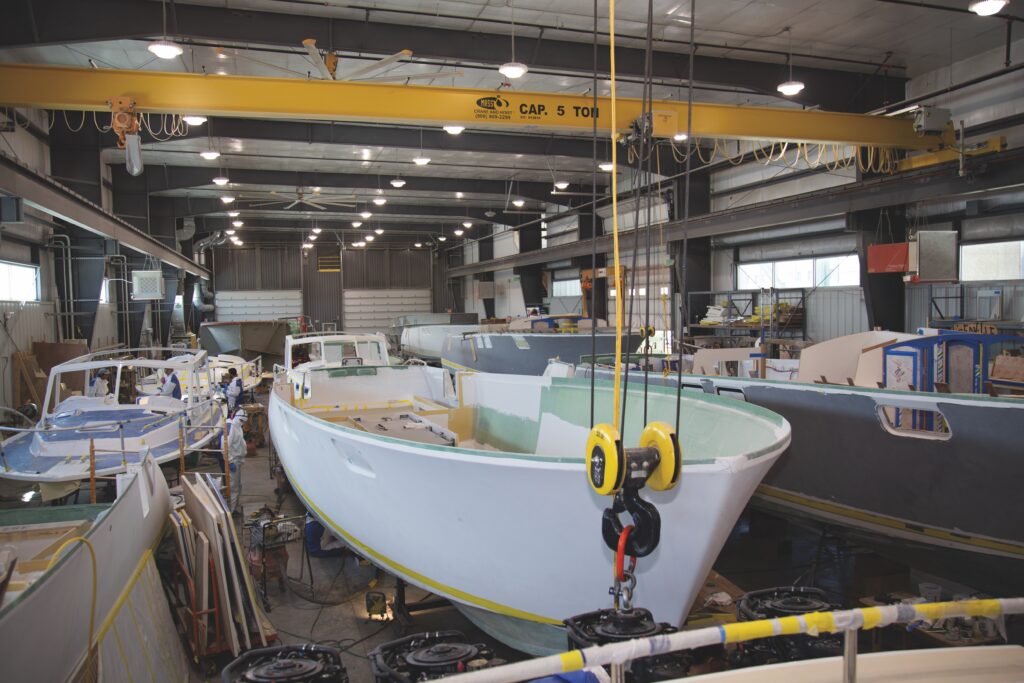
Boerstling’s background in manufacturing gives her an understanding of the struggles boatbuilders face. GARY REICH PHOTO
I think ABC provides tremendously positive value for the industry. I know some people do get intimidated by Washington, D.C., but what I hear very consistently from our members who come to it is that it’s an eye-opening experience. It’s so eye-opening that they wanted to come back because they saw the value and the impact and how important it is to touch government.
The themes change year to year, based on what topics are most current, but ultimately, I like to remind everyone that education is the number-one goal. It’s also vital to ensure that congressional representatives and the administration know exactly who we are and where we’re going as an industry sector, as well as what we represent.
People generally know someone who has a boat. A good majority of Americans have had exposure to our industry in one form or another, or even just through fishing. But what people and elected leaders don’t understand is the manufacturing story. They don’t understand that this is a made-in-America industry, and that we’re the world’s largest boating market.
What does that really mean in terms of hundreds and thousands of jobs and billions of dollars of economic impact from the industry?
Being able to tell the marine industry supply-chain story is valuable at ABC, especially in the current environment. It’s important that we educate legislators that most of our members are small businesses. When you break down marine manufacturing, yes, there are some larger industry players, but the majority of companies within the NMMA membership are small businesses. And what better story to tell than the small-business story? It’s the backbone of the economy, and it’s Main Street America.
One of the issues NMMA has dealt with during your tenure is the proposal to limit vessel speeds along the East Coast to protect right whales. What went into that proposal recently being shelved?
Partnership. That partnership and coalition-building, understanding the nuance of regulatory rulemaking, making use of the tools that were available to us — either through legal, procedural or targeted communications — were key. Also, knowing how to use that full suite of tools available to us in a highly charged, nonstop coordinated effort, that certainly was a piece of it. Then we were able to draw, in different circumstances, upon those tools when needed.
Sometimes it was a media interview that Frank Hugelmeyer, our CEO, would do. Or sometimes it was a quiet briefing of key staff in Congress. Other times it was going to the Small Business Administration’s Office of Advocacy and just keeping them updated to make sure they were using the levers that are afforded to them through the rulemaking process to support small business.
So it was not one thing or one person. It was coming into the situation and looking at the landscape and saying, “All right, can we fight this rule to live for another day?” So that was the effort to get delay. Also, how can we use facts and data to our advantage? How can we use people that were advocates and willing to step in and help us out?
I think an unseen part of the rulemaking was preparing for litigation and working with potential plaintiffs who were willing to step out and support a challenge to this rule. This is important to recognize as well, because not everyone wants to stick their name or put their face out there on something. And those citizen advocates are very important to our success as an industry.
The NMMA and the industry came up with solutions to the problem, such as the use of technology. How important is it to provide solutions versus fighting?
As a trade association, I think it’s super-important to be a solutions provider in highly charged advocacy environments like this. Or when something is happening, how can we bring to bear our resources to help demonstrate, “Well, there’s another way to do this.” Or, “Hey, we’ve been giving this thought, and we agree that you’re going down the right direction.” Or, “No, have you thought about it this way?”
I think every industry in America is facing a unique set of challenges. And this is a noisy space in Washington, and everyone hears me say that quite a bit. There’s a lot of people here in town advocating for things that impact human life, things that impact the industrial economy, things that impact education. You name the issue, it’s covered here.
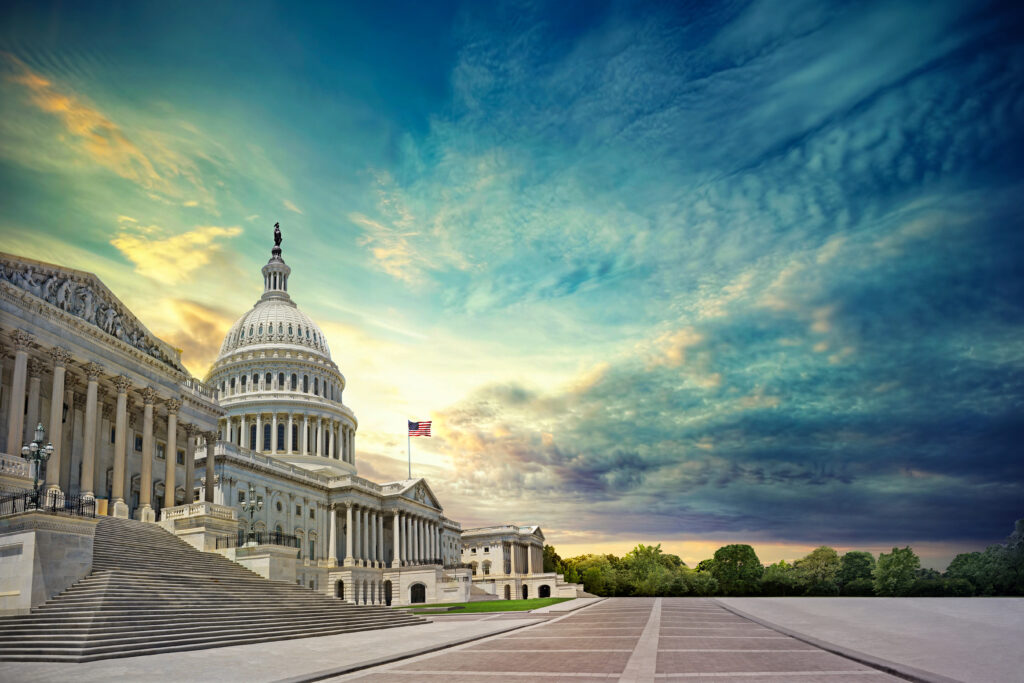
Telling the marine trade supply chain story while educating legislators is imperative to advocacy efforts on Capitol Hill.
PHOTO: SAGITTARIUS PRO – STOCK.ADOBE.COM
We’re one of many voices in Washington, so how do we stand out? We must make sure our members are engaged and at the table, and that we’re keeping them apprised and educated of what’s happening, and then use them as the appropriate voice, really, to lead. Because again, showing how it impacts real business is the gold standard.
Tariffs are a big issue for marine manufacturing this year. What are NMMA’s strategies on that front?
It is a big question, and it goes back to what I said earlier about education, and that is our number-one goal. Given the dynamic shifts in Congress, over time you get new members of Congress, new senators, new staff. It is sort of a revolving exercise to be able to communicate the impact on our industry. Being on top of that education is important.
Also vital is ensuring that key staff and members know that 95% of boats sold in the U.S. are made in the U.S. Again, as I said earlier, when I opened our conversation, people know aspects of the industry and know boats exist. They know marinas, they know the waterfront, so to speak, but not necessarily what goes into it and, “Wow, that was a boat made in Tennessee or in Georgia or North Carolina?” People don’t always know there is a whole ecosystem that supports the boat industry here in the U.S. and that it supports more than 800,000 jobs.
We start off with the education. We’ve collected a lot of information from our members on how they’re impacted by the tariffs, and have different anecdotes and stories to communicate that this does have relevance. But we’re also asking for a targeted approach that recognizes the value and positive impact of our industry because we are a made-in-America industry, and that much of our industry represents the community impact, the jobs that the administration is seeking to advance. So it’s telling our story relating to tariffs in a way and with words that are relatable.
Water access and infrastructure are issues that usually come up at ABC. Is NMMA working on any initiatives as far as that’s concerned?
Water access is a big item. I would say all the related issues fit into some main themes, including protecting public waters and boating access, driving industry sustainability and innovation, keeping manufacturing — and remanufacturing in particular — competitive, and improving and expanding recreational infrastructure.
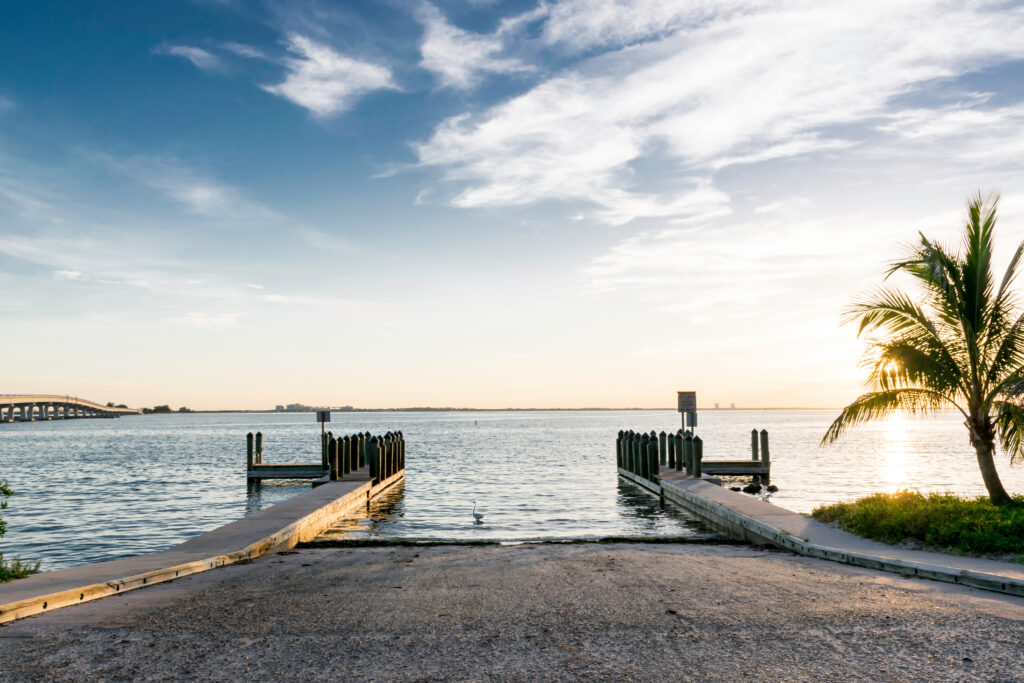
Ensuring that outdoor recreation spaces are well-maintained is a key advocacy issue for NMMA.
PHOTO: CMULLER-STOCK.ADOBE.COM
Within those areas, we certainly have a lot of opportunities and a lot of work to do. Trade and tariffs, as we talked about earlier, fits into that manufacturing side. States have demonstrated and shown an appetite for restricting access. Wakesurfing boats and personal watercraft restrictions come to mind. We’ve been successful there and in other places last year, and we’ll continue to do that this year as those fights continue in certain places.
What other advocacy initiatives is NMMA working on this year?
The extension of the Tax Cuts and Jobs Act of 2017 is very important. I would say the timing of ABC is perfect for that because the TCJA expires at the end of this year.
Advocating for the tax code to support next-generation investments and technology, keeping the R&D deduction, reinstating the full expensing for capital investments, and keeping the lower corporate tax rate are all important. These are things that help business continue to be cutting edge in investing, not just in machinery but in people.
The deregulatory agenda of the Trump administration is another area for opportunity that we’re looking at closely. Those are not necessarily areas where you go to Congress, unless we’re looking for a Congressional Review Act on a particular rulemaking that passed last year.
We have been talking to our divisional board members and asking for their leading regulatory issues that might fit into a deregulatory agenda. We’re gathering that intel and those insights now and in real time. Hopefully, we’ll be able to hear from a member of the administration who can talk more about that to the ABC audience. But also, this is the year that the Sportfish Restoration and Boating Trust Fund has to be reintroduced, because that also expires this year, and this trust fund is reauthorized through the Highway Bill. I don’t know if everyone knows that.
Additionally, we’re trying to figure out when the reauthorization is going to get introduced, and when the timing of that is, because that will be another area where our members can advocate. It’s an important user fee that’s collected by boating users and anglers. And that money is reinvested to the states for conservation, boating and infrastructure access points. So it’s really in our strong interests to be advocating for a timely reauthorization of the trust fund.
What is the most challenging aspect of doing advocacy work on Capitol Hill and in state government?
There’s high turnover with staff. I’m sure if we sat down and got our pencils out and looked at who was on the Ways and Means Committee in 2017 versus who’s on the Ways and Means Committee today, we’d see a lot of change there.
That change is certainly an area we can and must work through, but it is definitely an opportunity. Three members of that committee have a strong interest in the marine industry. You’ve got Congressman Aaron Bean from Florida. He’s from, I think, north of the Jacksonville area. There’s a strong boating nexus there, and there are some manufacturers in northeastern Florida. Congressman Nathaniel Moran from Texas, I heard he just went to Skeeter this month. He did a plant tour. There’s Congressman Rudy Yakym from Indiana, a top manufacturing state nationally.
When you break down Elkhart, Ind., which he represents, that’s a major RV and marine manufacturing hub. We have some great representatives on the Ways and Means Committee, and that presents the great opportunity for our industry to make sure we’re heard, both on the trade and taxes side of things.
Things are so divisive these days, politically. How does NMMA remain as moderate as possible?
The NMMA structure is divided into three divisional boards. You have the Engine Manufacturing Division, a Marine Accessories and Components Division, and a Boatbuilders Division. The traditional manufacturing issues, they’re all, I would say, very unifying. Our members can come together and care about issues. Some are going to care about one area a little bit more than others, but I think there is certainly enough to keep us very busy for the two years of the 119th Congress.
I think everyone knows this is a new administration, and the president is three months in. This is an opportunity too, with the newness of the second term of the Trump administration, to reintroduce our industry and to be here in Washington together, and to make that splash, for lack of a better description.
But really, at the end of the day, this is an industry sector. Everyone says, “Oh, it’s fun, it represents a lot of fun,” and that’s true with enjoying the water, but also boating brings people together. And it’s not particularly political in that regard, so I think we have a lot of goodwill when we show up for our meetings in Washington because of the nature of the business.