
Suzanne Blaustone grew up in Orange County, Calif., and attended college at Cal Poly Pomona before moving to Chicago to pursue a career in sales. She spent the 1980s and ’90s succeeding in sales roles in the steel and petrochemical industries, which were dominated by men.
She met Barton Marine Equipment owner David Coleman while repping a 3M product at a sailboat show in the ’90s. Blaustone eventually moved to the U.K., and the two married not long after.
Coleman died in 2014, which is when Blaustone stepped in to run the sailboat deck equipment company that he had owned since 1986. Today, Barton Marine Equipment continues to innovate in the sailboat equipment space under Blaustone’s leadership amid Brexit, tariffs and other macroeconomic challenges.
(This interview has been lightly edited for space and clarity.)
Tell us about your upbringing and career history.
I grew up in Orange County, Calif., and went to Cal Poly University at Pomona after high school. Only two weeks after graduation, I moved to Chicago. I wanted to live in the big city, and I thought it would be exciting to try something new.
My goal was to start a career in sales. I wanted a job in the steel industry, but when I first got to Chicago, I couldn’t really find the job I wanted right away. So I ended up working for a company that leased cars, and by chance I found myself leasing a lot of those cars to men in the steel industry. I networked with them and eventually found a company that would hire and train me. I think I was probably the first woman in the United States selling hot-rolled steel bar on the road.
I stayed in the steel industry for almost 15 years before I went into the chemical coatings business in the ’90s. I was a polyurethane specialist in water-based chemistries, and at one point I moved to Europe. I was hired by a Belgian company to open an office in the U.K. I’ve been in the U.K. 28 years now.
I worked for that company for four or five years and then started my own company selling polyurethane products throughout Europe. Most of my clients were American companies trying to establish sales management teams in Europe. They would hire me to sell their product ranges here in the United Kingdom and Europe.
What’s the history of Barton Marine?
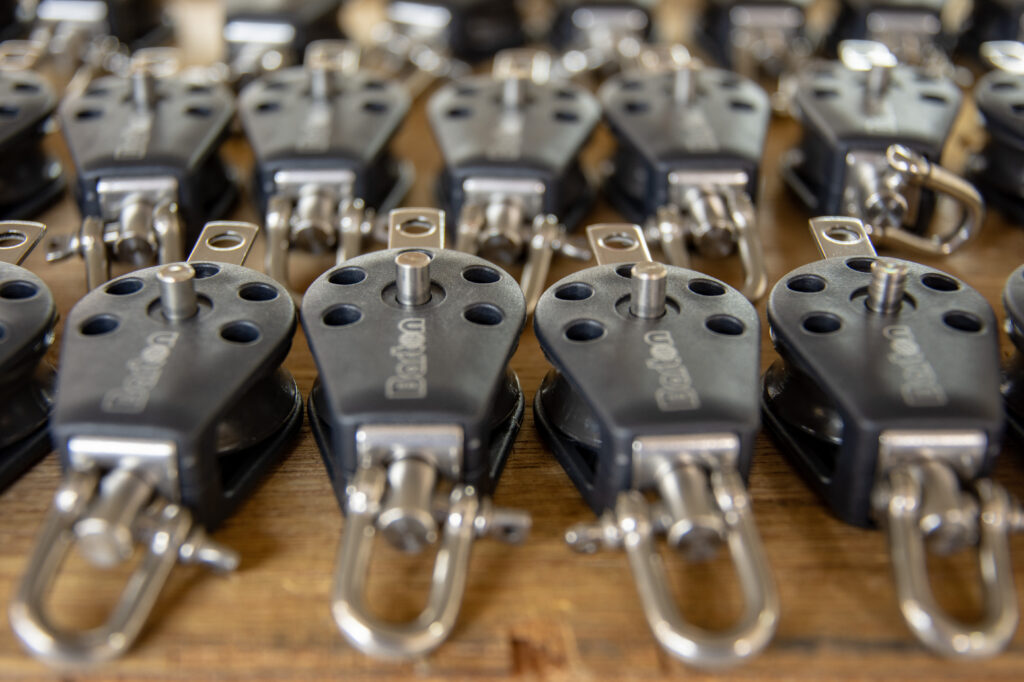
I’m very proud of this company. It has an amazing history. The war had just ended, and Ron Barton decided that instead of running an engineering company, he would focus his skills and talents on the marine industry. He started Barton Marine in 1948. He was an avid sailor and believed sailors needed affordable equipment that would last forever and that was lighter than what was available on the market back then.
Whitstable, where Barton started and is now based, has a small harbor — it’s basically a fishing village. Back in the ’40s, there was a lot of commerce here based around barge shipments of unfinished materials for the war effort. Things like shipbuilding and aircraft components. One of the things Barton saw piling up in the harbor was a product called Tufnol, a reinforced, resin-based product the military used because it was nonconductive, tough and lightweight. Reinforced phenolic resin is another name for it.
A lot of this stuff was sitting around unused, so Barton offered to buy the scrap. He and his engineers found ways that they could cut that material and make it into inexpensive sailing blocks. Eventually, they were crafting all sorts of sailing hardware from Tufnol: cleats, turning blocks and more. So that’s how Barton Marine started.
When plastic injection molding came around in the ’50s, Tufnol use was on its way out. Barton continued using the material until about 1960 and then went straight into using plastics because it was lighter and easier to customize and work with.
How did Barton grow the company outside the U.K.?
The company was very successful in England because of the big leisure sailing market there, but Barton knew that there would be a day when England couldn’t be the only market the company sold to. In the early ’50s, he started exporting sailing gear to European countries outside the U.K. One of the first relationships he established was with the Robert Lindemann company, which is a distributor in Germany. The company still buys from us, and today we export products around the world to distributors we have great relationships with.
What happened next?
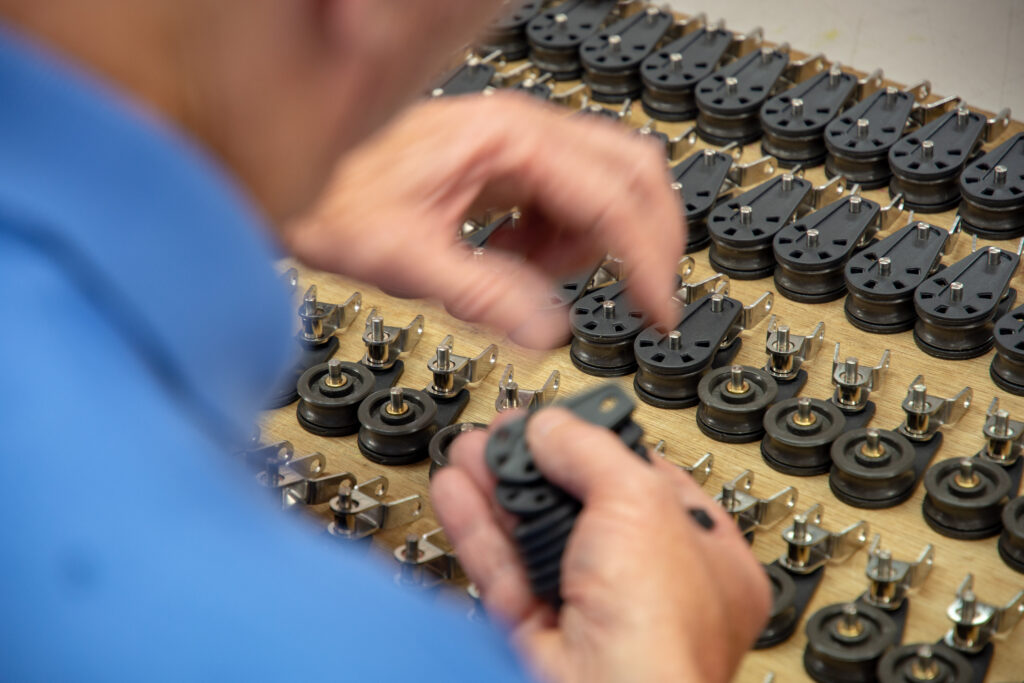
Barton eventually launched a full stainless-steel block range, as well as all sorts of gear that goes along with sailing. He manufactured a full line of cars and track systems, and much more, over the years. In the ’80s, Ron was looking for a succession plan when he met David Coleman, who at that time was the sales director for RWO, another block maker in the U.K. Ron told David: “I would really like you to buy my company. I know you and what your ethos is. I know your work ethic. You’re the man that should buy this company.”
They worked out a deal in 1986. David believed explicitly in export. He knew that he could support the U.K. market, but he also knew that to grow the company, he would have to continue expanding further outside the U.K.
How did you meet David and begin a relationship?
David and I met at a sailboat show. One of my biggest customers at the time was 3M, and the company asked me to work their stand with them to support a product that used one of my company’s materials.
I met David there. We dated across the Atlantic for about seven years, and I finally said, “OK, I’ve had enough. Yes or no?” And he said, “Are you giving me an ultimatum?” And I said, “Yes I am.” That was 1997, and I have been in the U.K. ever since.
How did you come to run Barton Marine?
David was diagnosed with cancer in 2003. At that time, they gave him about five years of survival, but he lived 13 years after the diagnoses, beating all the odds.
As he grew sicker, I wasn’t really prepared for what might come next. Eventually, David said, “Why don’t you come to the office several times a week? You could even move your office into our offices so that you can see what’s going on, because if something happens to me and I can no longer run the company, you can be my eyes and ears here, and you can tell me what’s happening.”
I did that, and then he sadly died just several months later. So I kind of fell into the deep end of the Barton business. I decided to stay because of the legacy of the company. David had worked on the British Marine Federation board for 25 years, and he was an icon in the industry. I just wanted the company to survive. I wanted to protect the employees here and for them to have a good livelihood. That was in 2014.
What did you learn after you took over?
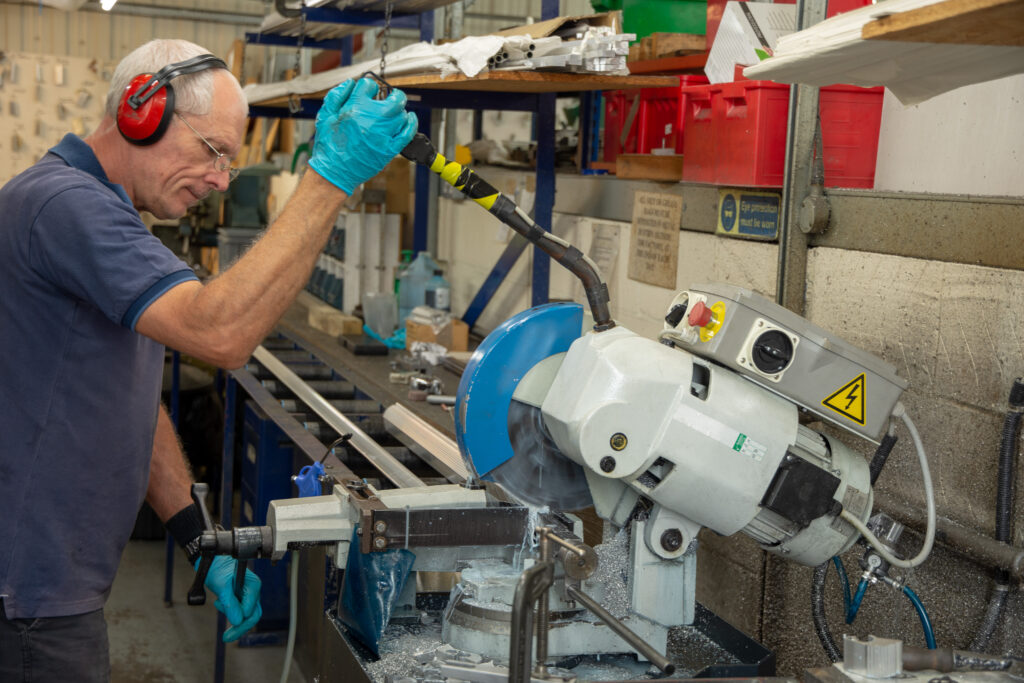
I found out that there was an awful lot of work that needed to be done to bring the factory up to snuff from a production standpoint. We needed to refurbish our tools and acquire some new equipment. We also needed to get some new people to help modernize and perform better.
Not everybody wanted to work with me after David died, and a few people left. I hired a new production manager, Dermot Bealey, who came to work for us in 2016. He had come from production industries and was a keen sailor. He loved Barton, and he loved the product range and knew when he made something, it benefited the sailing community. We spent the following years updating our product range and manufacturing assets, as well as introducing more efficiency into our production lines.
Barton manufactures sailing gear, and it supplies other industries, right?
This year we introduced a gland system for running pipe, hoses and other mechanical pieces through bulkheads. It’s watertight and meets several compliance directives required in commercial boatbuilding. We’ve also put a lot of effort into rigging systems for telecom companies, and gear for the theater industry. There’s probably not a theater in London where you look up and don’t see our blocks pulling the amplifiers and the curtains and all the lighting. We’re very active in the gymnastics industry, the shelter business and also in playground equipment. We have to diversify because you can’t stay strong during slow periods in the marine business without other products to offer.
What makes Barton Marine different from its competitors?
I think mainly that we’re small-batch professionals. When you make things in your own factory and you make the parts for them, you can produce just what your customer wants, even if it’s a small order.
We can also modify or change products in a bespoke sort of way, which larger manufacturers like our competitors in Taiwan just can’t do. This responsiveness is an advantage for us. We have all the bits and pieces right here, and can modify and customize very easily.
How big is the Whitstable factory?
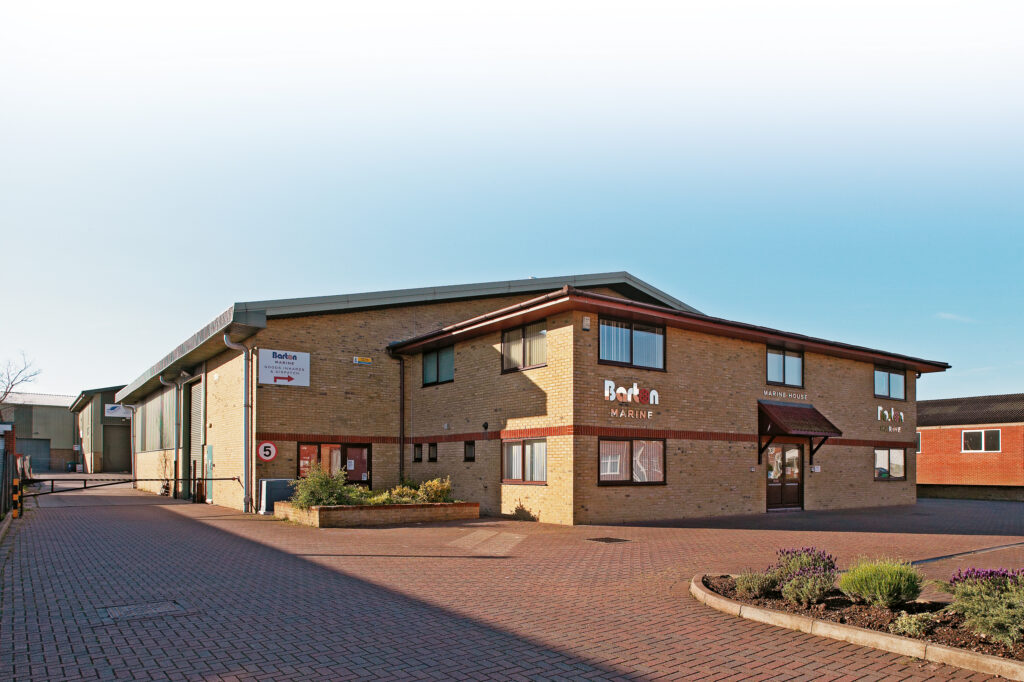
We have 13,000 square feet and employ around 30 people.
How has the decline of the sailing industry the past 10 years affected your business?
The sailing business might be a challenge because the middle class is diminishing. You know, we’re coming along in a period in the world’s history where you have an awful lot of people who have a lot of money, and you have a lot of people that don’t have a lot of money. If the middle class is diminishing, I think that means those people who want their leisure time to be used out on the water with friends and family might not be able to afford even a modest boat to do that.
For example, the country with the largest middle class is India. We currently don’t have a distributor there. So guess what? I met with the Department of Business and Trade for India in December because even if the market isn’t strong there now, it will be someday.
We also look for expansion markets where we aren’t strong or we don’t have representation. We currently have about 36 territories and countries that we distribute and sell into. And we’re always looking for the next market that would be good for us.
In 2020 we decided to open our own company and set up operations in the U.S. Our decision was to open a pick, pack and ship operation. Working with our colleagues at Rooster Sailing, we set up warehousing in Hampton, Va., hired an operations manager and launched a distribution program shipping to the U.S. and North America. Although we still manufacture everything at our factory in the U.K., we ship and top up the Virginia warehouse every two weeks and then ship to dozens of accounts through the United States.
Over the last few years, we’ve moved into the Pacific Rim countries because the Asian markets are still strong. We’re now strong in Vietnam. We’ve got a distributor in Thailand. We look for emerging markets that can help us grow.
Tell us about the work culture at Barton.
Many of my employees here would tell you it’s like a family. Now, I’m not sure that’s a good analogy because, you know, your family loves you regardless, and I still need people to perform, but we’re a very close-knit group. And because we are lean for the amount of business that we do, we need to depend on each other.
The teamwork is essential. We start every day with a production meeting that lasts for 15 to 20 minutes where we go over every order that we’re working on, so we know exactly where things stand.
And we always end that meeting with a laugh of some sort. Someone will say
something funny. I have a habit of firing somebody in those meetings every day for fun. If somebody doesn’t get something done on time, I might joke that they’re fired. We have a very jovial team, but we’re serious about getting things done and producing the best gear we can.
We also have get-togethers like bake-offs and dinners where people bring in dishes instead of us catering out. We actually did Thanksgiving this year, and one of our people brought in a roast turkey. Brits don’t do Thanksgiving, as you know, so there was a bit of humor involved.
How are macroeconomic headwinds, including tariffs, affecting the business?
Mainly, our margins are being squeezed because I have to absorb some of that tariff situation with the United States. I also have to absorb some of the higher shipping costs, but there’s only so much we can write off before we pass on certain costs to our customers.
The biggest challenge right now is that we have higher taxes in the U.K. than ever. You know, our business rates have gone up by over a third since in the last three years. Our corporation taxes have gone up from 19% to 25%. I also have to pay what’s called national insurance, which represents 15% of my payroll. When you’re putting that kind of money forward to the government, I find the business is being squeezed more by the government than I am with tariffs or shipping costs.
Brexit has affected us greatly in trading with Europe, too. I was very proud when Brexit hit because Barton was one of the first companies to come up with what we called the Brexit Brief, and we gave it to all of our distributors with all the plans that we could possibly think of to get us through that situation. We didn’t lose a single customer in Europe after the Brexit initiatives hit in 2020 because we were prepared. We prepared our people. We did everything we could to train our dispatch people, so they were ready to create the paperwork that was going to be necessary.
I wish the world would calm down again. I wish we would focus on working together instead of moving apart.
What do you find most rewarding about what you do?
I love being a U.K. manufacturer. We make our product with our own hands, and I’m very proud of that. It’s what makes me want to come to work every day. I also like the people I work with. I also love being in an industry that people are passionate about. I get to come to work and manufacture products that make people happy and that get them out of the office and out on the water with their family and friends.
I never in my life thought I wanted to be a boss. I always loved being a worker bee. But as luck had it, the cards were shuffled in this direction. And when David died, I really didn’t have a choice. So I became a boss. And I like trying to be a better boss every day.
I also like the fact that we have bespoke products. I really like the fact that there are some things Barton has that nobody else has. We have the plastic injection molding, the stainless steel, the aluminum, the wooden blocks. We have a full line of wooden blocks that no one else makes. It makes you want to come to work because you know somewhere in that puzzle you’re going to find a way to move the company forward.
This interview first appeared in the February, 2026 issue of Soundings Trade Only.