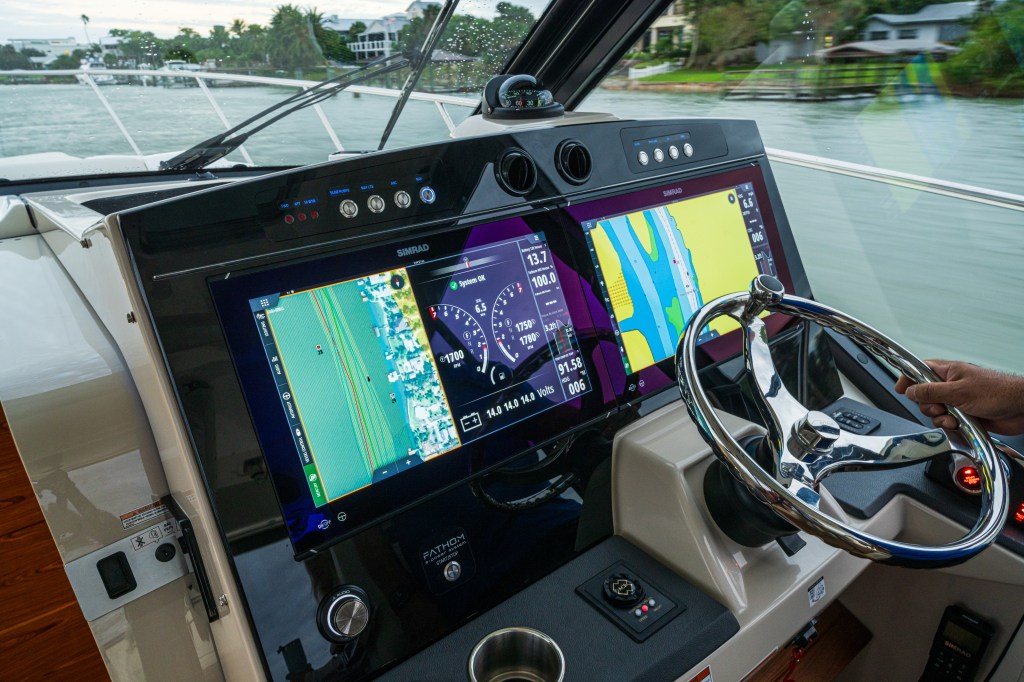
If you find yourself reading this column with some regularity, this isn’t the first time you’ve read my thoughts and reports on the state of autonomy and assistance products in the marine industry. This month, as we focus on integrated systems, an update on autonomy and assistance feels appropriate.
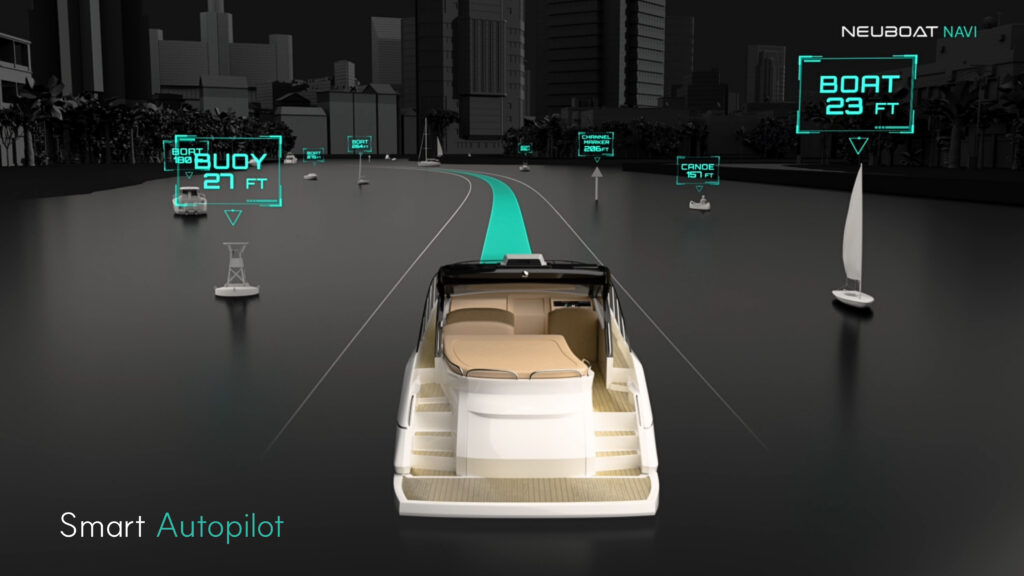
When we think about integrated systems, it is hard to imagine a more highly integrated system on a boat than one that utilizes existing sensors and adds its own, presents a user interface and is controlled — including propulsion and thrusters — with the boat’s multifunction displays. The amount of integration required for any sort of autonomy or assistance product is dizzying. It’s extremely challenging to program a machine that can control a boat in the dynamic environment of water with wind, current and other forces. Add the need to connect myriad sensors, to model the world around the boat, to understand the intentions of other moving objects, to display that information, and to issue commands to the engines, transmissions, steering system and thrusters. It can all seem like an insurmountable mountain.
Two of the most influential people scaling that mountain are Brunswick Corp. chief technology officer and Navico division head Aine Denari, and Avikus vice president of recreational marine Sangwon Shin. They and their companies’ products represent a fascinating and contrasting look at ways to seek solutions for all these challenges.
Truth be told, autonomy and assistance products have proved challenging on land because of the sheer number of situations they encounter. But on land, cars at least travel on roads distinct from the land around them, roads that have helpful identifying marks such as lane lines and signs. On the water, things are different. Water that provides safe navigation often looks the same as water with hazards just below the surface. There are aids to navigation, but they can be sparse, off-station or missing.
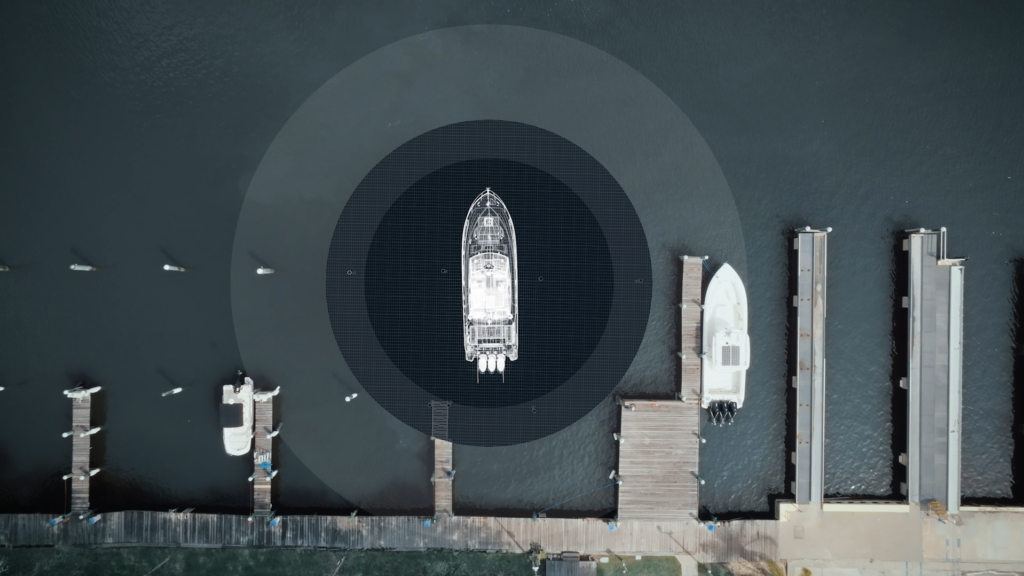
Navico and Avikus are years into their efforts to overcome these challenges, and to assist boaters by reducing stress. Both companies focus on low-speed and close-quarters operations. We all know boats don’t have brakes, but when the wind is blowing, the current is ripping and the boat just a few feet away is getting ever larger, having a system that can act as a brake, dodge hazards and reduce the operator’s workload can provide needed calm.
Neither the Navico nor the Avikus teams believe boaters are looking for systems that deliver an entirely hands-off experience. Instead, they’re looking to make the most difficult parts of boating easier. Their thinking is part of a journey the industry has been on for decades, with the addition of thrusters, pods, joystick controls and many more systems.
“Of course, the real answer is there is no one consumer,” Denari says. “There’s a lot of different boaters with different needs. We prioritize the biggest pain points we can address with technology so that we can remove the most barriers from the largest group of people.”
Shin says a lot of customers and potential customers ask his team for the same thing. “Currently, our system targets operations under 10 knots, but customer feedback asks for higher speeds, like 20 or 30 knots,” Shin says. “In their comments, boaters explain that they head on the water with a purpose. That purpose might be getting to the fishing grounds or spending time with the family at a sandbar. But often that’s a longer journey, and they want an additional eye keeping a lookout and taking over if necessary.”
Achieving what customers want can be done in various ways. Brunswick, through its ownership of Navico, Mercury and numerous boatbuilders, controls nearly the entire stack that requires integration. Avikus, as part of HD Hyundai, is in a very different position.
“When you talk about integrated systems, we can do things nobody else can because we own that full chain,” Denari says. “We can provide privileged and safe access to the propulsion system which is taking the action. We address cybersecurity risk. We have developed a full, integrated solution as a single end-to-end provider. We are able to deliver that in a functional and safe way.”
By contrast, neither Avikus nor HD Hyundai produce other products in recreational marine. That reality, paired with Avikus’ desire to make its system available to as large a portion of the market as possible, means additional challenges.
“I’m a firm believer in OneNet from the NMEA,” Shin says, referring to the ethernet-based data standard from the National Marine Electronics Association. “They’re driving to make all data shared and the protocols aligned. OneNet allows third-party access to sensor data on the boat. Currently, the lack of standardization in accessing on-board systems is one of our biggest challenges. Every radar, sonar and joystick system is a custom implementation.”
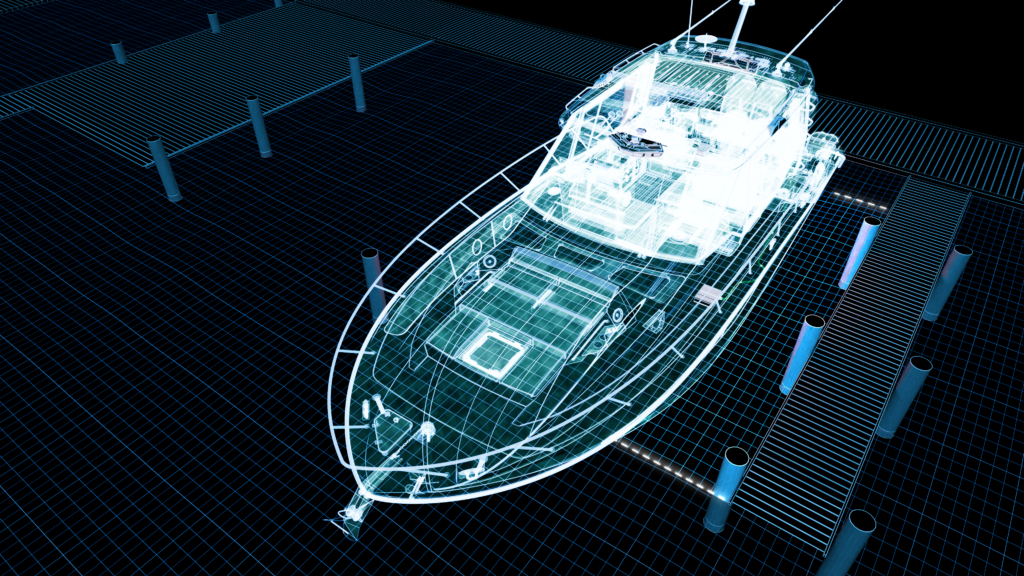
Shin also says Avikus views further sensor integration as a foregone conclusion: “A lidar sensor and cameras are not enough. We will use sonar, radar and any other sensors that can help us understand the environment around the boat. We will have redundancy so that in challenging conditions or in the event of a problem with one sensor, the system still works.”
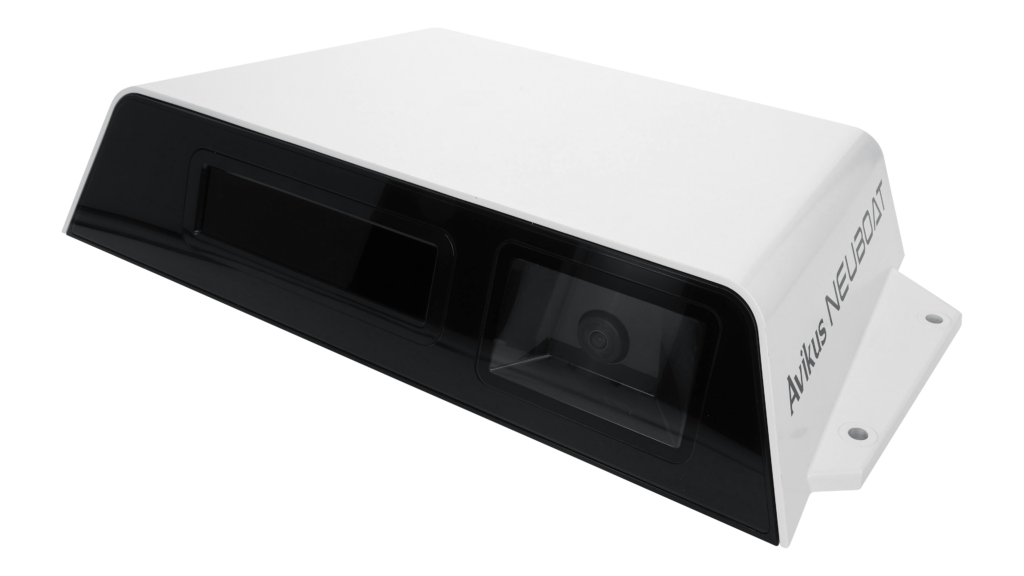
Avikus and Navico each leverage capabilities within their organizations, as well as selecting best-of-breed components from others. For instance, Avikus uses camera technology from Hyundai Motor Co. “When we started development in 2020,” Shin says, “there were no partners or technologies focused on marine. So we had to build our own. The underlying technology, we brought from Hyundai Motors.”
Navico’s AutoCaptain utilizes stereoscopic cameras from Carnegie Robotics, with good reason, Denari says: “Carnegie Robotics has a long history in robotics, computer vision and machine learning, and path-planning in other industries. Their foundational knowledge was really helpful to us as we developed AutoCaptain.”
Delivering these products would be nearly impossible without access to that kind of capability. Even without engineering every portion of these systems in-house, the work that Navico and Avikus are doing is herculean. Without integrations and partnerships, it would be nearly impossible.
Shin estimates that by 2030, his team will deliver the full suite of capabilities they have planned. In a world in which some tech entrepreneurs have spent years promising full autonomy in a matter of months, Shin’s projection sounds more realistic.
This story originally appeared in the May 2026 issue of Soundings Trade Only.