

Listening to marine-industry leaders talk about their hopes and plans for 2026 is kind of like listening to captains who have just emerged from a series of battering storms. Their vessels are on course. Everything they can control is working properly. But they’ve also braced their legs, with hands firmly on the wheel.
Through the windscreen, they are staring down a roiling seaway that’s crowded with hazards snd shifting shoals while the weather forecast calls for an occasional Category 5 hurricane. As Tim Derrico, director of sales at HMY Yachts in Stuart, Fla., puts it: “Our business is great unless there’s some big-time catastrophe.”
The second half of 2025 was better for boat sales than the first half, he says, but concerns about potential global events loom large. “As long as nothing happens with the bad guys around the world or there’s some kind of big financial meltdown, we’ll be OK,” Derrico says.
It’s a widely shared sentiment. Numerous other segment leaders say that as 2026 begins, they’re focused on fundamentals they can control. From political machinations to technology advancements and the business-investment climate, leaders are thinking about all kinds of potential landmines as they work to shore up everything within their purview.
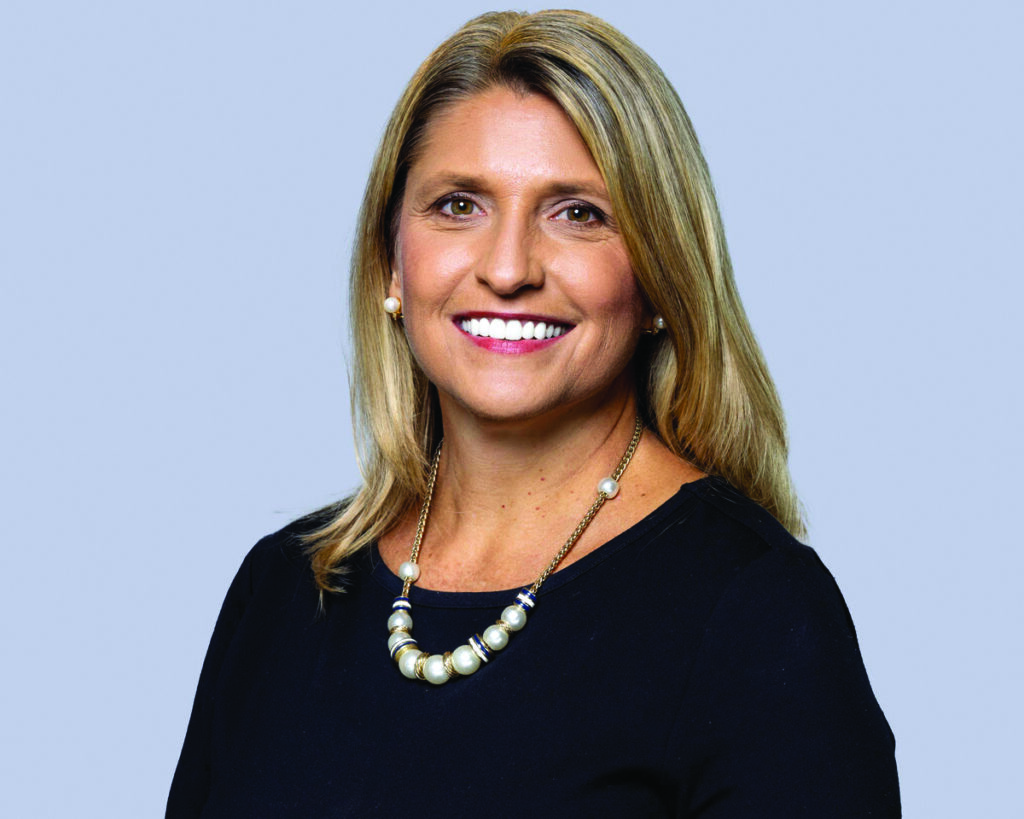
“My hope for the coming year is that we will have greater clarity on the tariff situation,” says Paulee Day, who was named West Marine CEO in November. “The lack of clarity creates more uncertainty for everybody, us included.”
John DePersenaire, director of government affairs and sustainability at Viking Yacht Co.in New Gretna, N.J., says the overall challenge in consumer affordability is creating real pressures too. “It’s tough,” he says. “The price of boats in the past five years, it’s been incredible. From slips to operating to insurance to the build materials, it’s crazy expensive. We don’t want boating to be something that’s just exclusive to the very rich.”
Samir Shah, senior vice president and chief information officer at Mettawa, Ill.-based Brunswick Corp., is thinking similarly about the macro effects of artificial intelligence. “Remember dotcom in 1999, and the world changed? People were saying it’s a bubble, it’s not a bubble — all of that is happening with AI,” Shah says. “And AI has a FOMO, fear of missing out. Every board member and CEO is asking their teams to do something with AI. And because of this FOMO and people trying to do AI, you have companies selling half-baked solutions.”
Similar concerns are on the mind of Baxter Underwood, CEO of Safe Harbor Marinas, as he considers the financial investments needed to grow the boating industry overall. In April, Blackstone completed a $5.65 billion acquisition of Dallas-based Safe Harbor, a deal that’s making other financial investors see potential windfalls. However, just as Shah says about AI, Underwood says not all acquisition ideas are going to be fully baked. “They’re getting into parts of the business that are more volatile,” Underwood says. “I think that the financial partners that are with them, whether they’re lenders or investors, when they experience volatility from those investments and they don’t do what the investors think they’re going to do, it’s not going to be fun. I think that could have a follow-on impact.”
Retail Goods
West Marine’s new CEO says struggling boat sales mean that more boaters are buying things for their current vessels. “They’re more likely to work on their boat or seek aftermarket solutions to fix a problem or upgrade their boat,” Day says. “That’s good for our business.”
West Marine is seeing this phenomenon with do-it-yourselfers as well as the industry professionals they hire for more complex projects. The company is continuing to shift its approach, she says, with those two primary consumer bases in mind. “Over time, we were more focused on life-on-the-water strategies, all kinds of apparel and footwear. We’ve cut way back on that and tried to focus our inventory on core products that boaters really need to keep boating and fishing,” she says. “Those products are trending up in the down market, so we will continue to focus on core marine and make sure that we have the depth and breadth of assortment that our pros need.”
By the end of 2025, she says, West Marine will have remodeled six locations based on that philosophy: Calumet City, Ill. (outside of Chicago); Annapolis, Md.; Sausalito, Calif.; and Daytona Beach, Panama City and Fort Lauderdale, Fla. “We’ve been looking for proof points to make sure our theory of having core marine products for pro and retail customers works, and it’s exceeding our expectations at every single one of the locations,” she says, adding that West Marine has already pinpointed six more locations for reorganization in 2026.
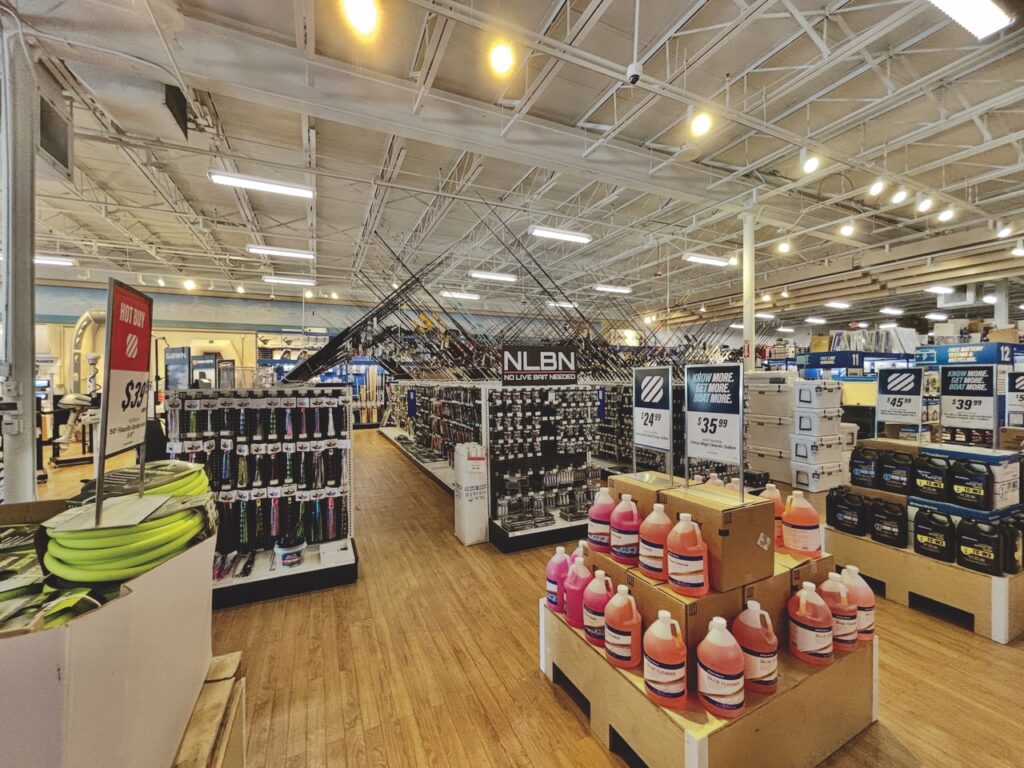
At the same time, the company is continuing to enhance its capabilities around online ordering and fast delivery. West Marine closed 15 underperforming stores in 2025, Day says. “We’ve made that tough decision, but with online selling and our omnichannel capabilities, we can get them everything they need, delivered to their service yard or their home or wherever they are,” she says. “When you’re able to do that, it almost doesn’t matter where you’re physically located.”
Government Affairs
DePersenaire says a lot has changed since the industry experienced the shock of the federal government’s proposed East Coast vessel-speed restriction to protect whales in 2022. That proposal was withdrawn last January, following years’ worth of industry advocacy and relationship-building. “And because of that, I think our industry is much more informed,” he says. “Companies like Garmin, Simrad, Furuno, FLIR, they’re all driving toward a place where we can collectively work to mitigate our risk with tools other than boats having to go slow. I think policy folks have also realized that there has to be a better way, a more holistic way of mitigating this risk.”
What comes with that kind of advocacy effort, he says, is a seat at the policymaking table — a good thing no matter what happens in this year. “I think for the first time, the industry is being viewed more as a partner in this, as opposed to being an adversary. That’s a great development,” he says, adding that trying to ease the impact of tariffs is another area where those kinds of relationships can be helpful. “The worst thing from a production manufacturer’s perspective is delaying purchasing. Putting that off is really hard for us. We have infrastructure. We have overhead. We have a workforce that’s highly trained. We can’t just turn off the lights and slow down. We have to keep building boats.”
DePersenaire is working on an idea to help boatbuilders gain tax offsets for tariff price increases, based on a similar deal for truck manufacturers that import parts and engines. “The precedent is there,” he says. “With Viking, the vast majority of the finished product is made here, but we import an MTU engine from Germany. There’s no other domestic equivalent. We’re locked into that power package. Our boat is designed around that. So let’s see how we can continue to build that 90-foot Viking with that engine, but offset that.”
Another issue he’s expecting to work on in 2026 is the Environmental Protection Agency’s focus on styrene, a component of polyester resin that a lot of production boatbuilders use. And he’s discussing IMO Tier III regulations that involve harmful emissions and larger vessels. “Right around 91 foot and bigger falls under the IMO Tier III regulation,” he says, adding that numerous U.S. sportfish builders have stopped selling models larger than 90 feet.
He’s talking with federal officials about possible regulatory relief. “We are restricted from an important market, that big sportfish market, because of this rule that doesn’t create any meaningful or measurable NOX reduction,” he says. “So we believe that’s another issue that’s ripe for reconsideration.”
Boat Sales
The summer of 2025 brought signs of life to new- and used-boat sales, but the federal government shutdown in October and November knocked down consumer confidence again, Derrico says. “It didn’t go completely quiet, but it definitely slowed things up pretty good,” he says.
At the fall shows, HMY sold models from Princess, Viking, Valhalla and Nimbus, in addition to brokerage and other boats. And it brought on MJM Yachts as a line. But consumer hesitancy remains. Derrico expects 2026 sales to be better than 2025 — not gangbusters, but better. And not necessarily for every type of boat, based on the fall boat shows.
“I heard across the board at Fort Lauderdale that the smaller boats were not selling very well. Let’s say under 35 feet,” he says. “Our typical client is fine. It’s just plain and simple consumer confidence. They’ve either got it or they don’t, but since August, business has improved.”
A big help, Derrico says, would be government action that makes it less expensive to buy a boat. “If they bring interest rates down, we’ll see a tick up in business,” he says. “That will especially help with the smaller boats, where the guy is taking a loan to buy that $200,000 boat.”
Helm and Wearable Tech
In November, Sirena Yachts in Turkey announced a collaboration that involves Vanemar’s remote boat monitoring system and Garmin’s EmpirBus. Sirena models will now have AI-assisted and voice-controlled features as a factory option. The initiative, the companies announced, marks a significant step toward bringing connected, intuitive vessel operation into series production.
The industry should expect to see more of that type of thing in 2026, says Dave Dunn, senior director of marine and RV sales at Garmin. “The buzzword we’ve used the past couple years — and it’s still relevant for 2026 — is integration,” Dunn says. “We’ve had this really cool thing out for a while now, but a lot of the builders couldn’t wrap their minds about how to implement it. Sirena was the first to implement it. Now other builders are talking about doing it, too.”
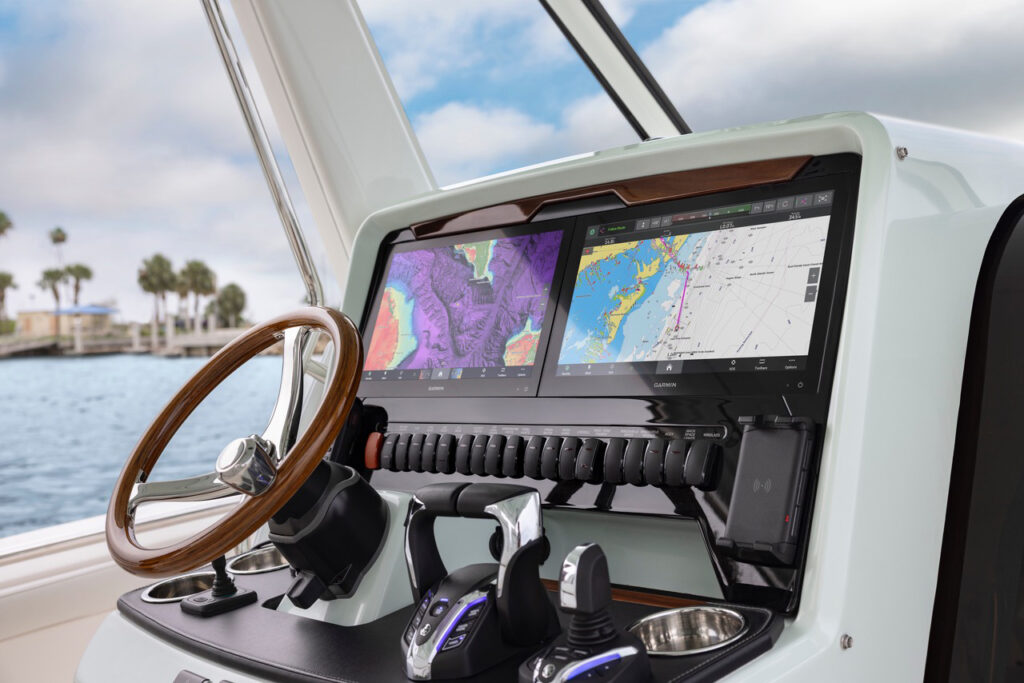
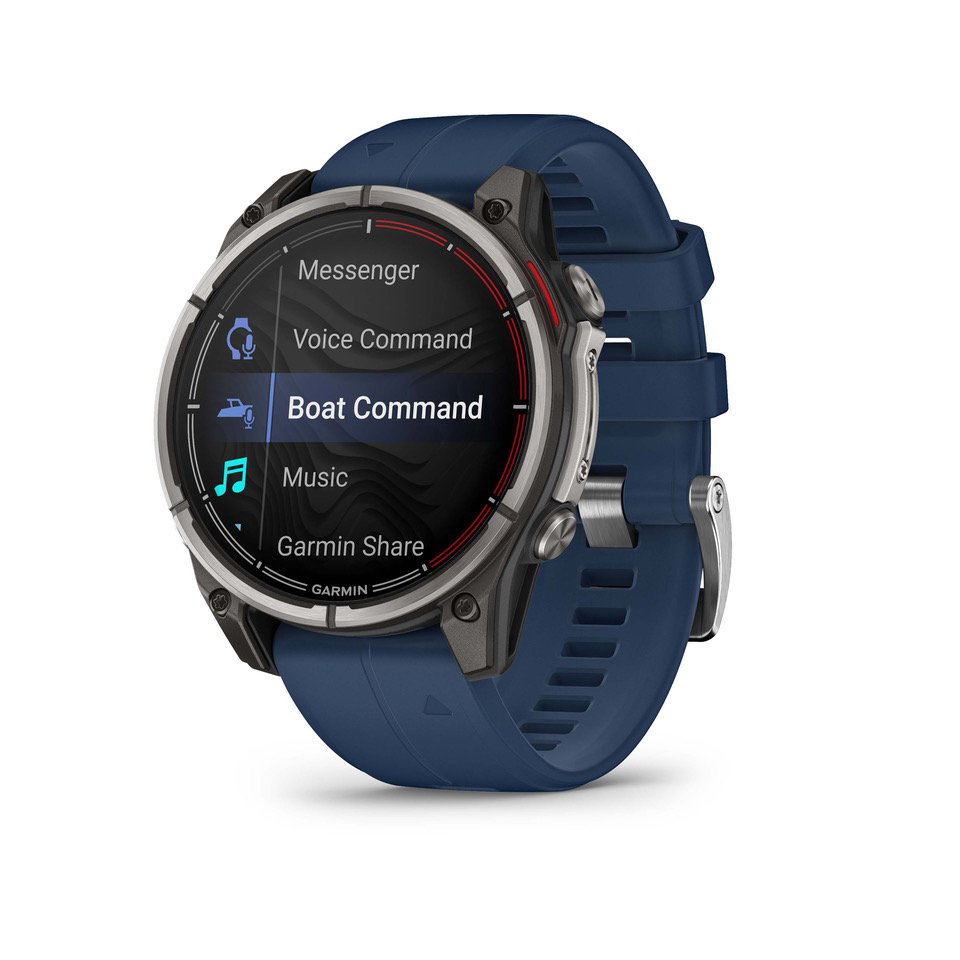
In wearable tech, Garmin has the Quatix marine smartwatch, which is on its eighth iteration. With the current model, users can talk into the watch and tell the Garmin GPSMap plotter what they want it to do.
The big brother to the Quatix is the Phoenix 8 Pro, which is the first smartwatch with built-in inReach satellite communication. “You can be virtually anywhere in the world, push a button on your watch, and it will dispatch an emergency service,” Dunn says. “And you can make calls and texts from your watch without having a cellphone. It’s logical to assume that the marine version will have that in the future too.”
Integration of features is something the whole marine-electronics industry is thinking about, Dunn adds. “Integration is top of mind for everybody,” he says. “Competitors want to integrate with the same partners we do because that way, the customer wins. The customer gets to choose. There will be more of that.”
Starting this month, he says, Garmin plans to begin shipping the 9000sxv premium plotter. They, too, are built with future systems and integration in mind.
Artificial Intelligence
For the coming year, Shah sees a need to focus not only on developing AI technology intelligently, but also on having a way to discern good AI tech from bad. “The biggest opportunity is in customer service, sales, marketing, product and R&D, and then software coding and development,” he says. “The reason is that there are mature solutions out there.”
In the area of customer service, Brunswick is deploying AI-powered chatbots and virtual assistants. Boston Whaler and Sea Ray are going to give consumers and dealers automated ways of getting customer service, as well as online boating manuals where they can ask questions and get the answers with links, videos and step-by-step instructions. These types of systems will also give boat owners AI-powered alerts notifying them of things like safety recalls, Shah says.
Today’s AI-powered chatbots aren’t the same as older ones, he adds. Traditional chatbots only work with structured data they’re provided — the information in the back end. “When you use AI, it works well with structured or unstructured data,” Shah says. “AI can scan through that and give you the best possible answer.”
That kind of difference exemplifies a big tech divide that all kinds of marine companies will have to consider in 2026, he says. With any kind of tool or product, there will be a need to determine if the AI variation actually works. “It’s very, very important for any company,” he says, adding that Brunswick has multiple people validating AI tools and products. “It’s important for companies not to just buy what’s out there.”
Shah also urges companies to test AI solutions before deploying them at scale. “Do a pilot,” he says. “But if you’re doing a pilot, make sure you have the right people internally to validate everything. Have somebody who understands the end users and customers. Go through all of that before you go into production or use.”
AI will also continue to help the industry move toward autonomous boating, he says. Simrad, part of Brunswick’s Navico Group, recently launched AutoCaptain. “You press a switch and say, ‘This is where I want to dock,’ and it does a beautiful, beautiful job. That’s where we are, and I feel like that’s where the industry is going to go,” he says. “It’s not with the smaller boats yet — there’s a cost to doing this — but we will continue improving this and get to critical mass scale.”
Marinas
Underwood says that while boat sales may be struggling, it’s not a big revenue focus for Safe Harbor Marinas. “At Safe Harbor, the way that we’ve done well in short- and longer-term downturns, like the great financial crisis or Covid, is if you’re providing an excellent experience,” he says. “It will cause someone to say, ‘This is of value to me, and I’m not willing to walk away from it even if I’m making other cuts in my life.’ ”
For that reason, Underwood says, Safe Harbor intends to invest heavily in its facilities and services throughout the coming year. “It’s the mission of the organization to drive that better experience,” he says. “We’re going to make significant investments to improve facilities and experiences.”
More acquisitions of marinas are on the horizon for Safe Harbor, as well, Underwood says, adding that Blackstone’s headline-grabbing acquisition of Safe Harbor created conditions that tend to drive copycats. Investors and lenders who fail to do their homework may get burned, he says, creating a negative feeling about the boating industry within the financial world.
“Blackstone has a lot of folks that follow them around, so there’s a lot of financial asset managers that thought to themselves, Oh, this is something I should be focusing on,” Underwood says. “But there is a way that we focus on it that insulates us somewhat from the cyclicality of boating.”
Big investors and lenders who don’t see the returns they’re seeking could cause all kinds of future funding challenges, he adds. “If they get hurt, they will leave,” he says. “It won’t just affect marinas; it will affect the livelihoods of those coastal communities. Whether it’s shipyards or restaurants or retail, they are the job providers for those communities. They are wonderful people at that delivery point, and you can’t replace them with AI.”