Walking the aisles of the Miami Beach Convention Center and the docks farther north along Collins Avenue during February’s Miami International Boat Show was an eye-opener for anyone who loves boats. At least a dozen themes ran through the new boats and products on display. One theme that caught my attention was the ever-emerging interplay between mechanical propulsion systems and electronic sensors and controls.
As education director at the American Boat & Yacht Council, I’ve had a front-row seat at several of the project-technical committee meetings where experts craft standards for new tech. At Miami, I saw the wide-ranging influence of the Control Systems PTC, particularly P-28 Electric/Electronic Control Systems for Propulsion and Steering.
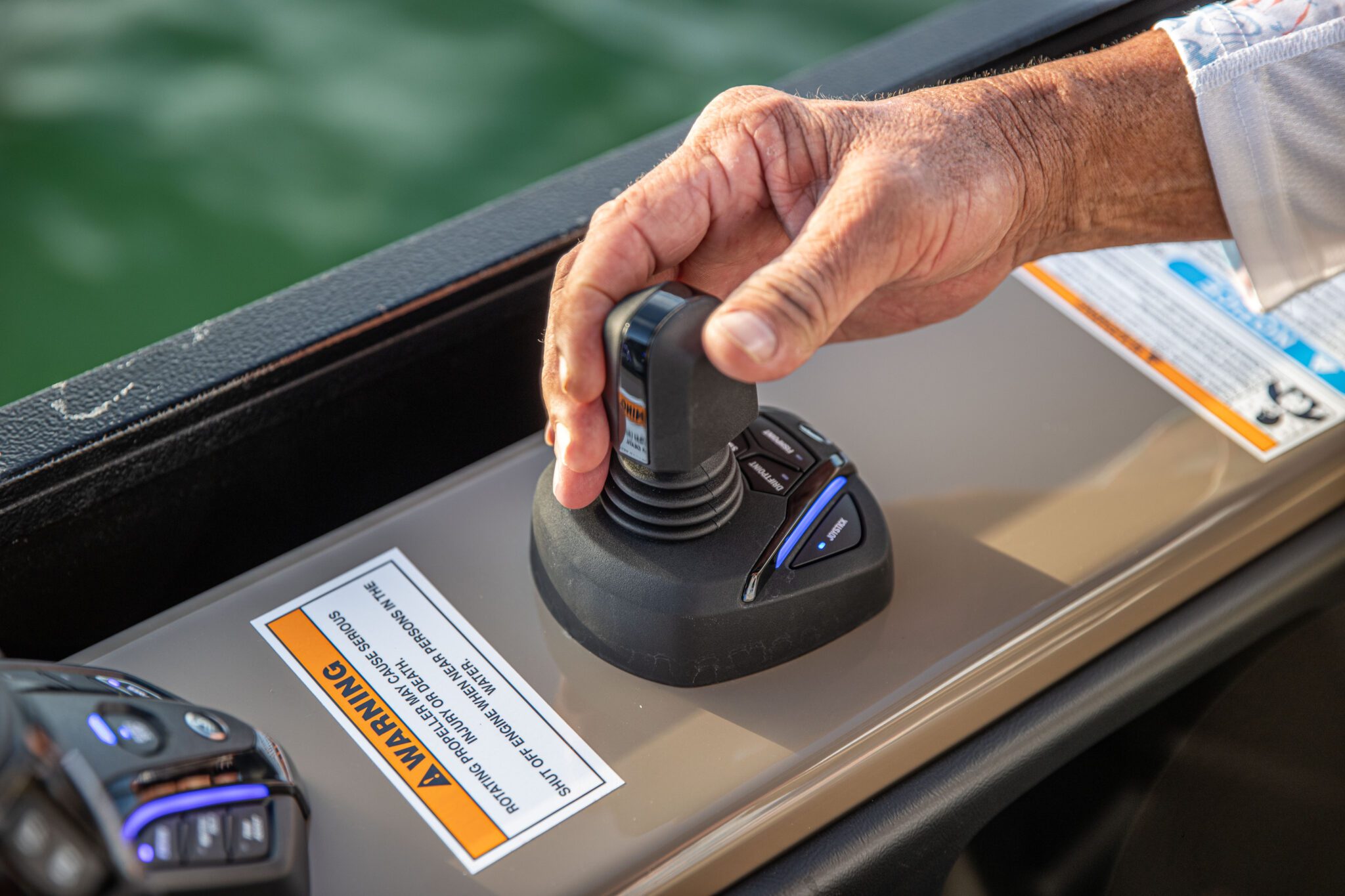
A decade ago, joystick control was just emerging, with products from the engine manufacturers Mercury, Volvo Penta and Yamaha, and the electronics and engine-control brands Dometic, Glendinning and Simrad, among others. What still felt new several years ago now feels like settled tech. It’s become almost ubiquitous through the fleet.
As that happened, the P-28 standard set uniform expectations across all the joystick brands. For example, P-28 tells us, “releasing the joystick in maneuvering mode will result in the joystick returning to the neutral position”; and “the boat shall move in the same direction that the control head of the joystick is oriented relative to the boat.” A skipper may never have heard of the ABYC or P-28, but today she can step aboard several different boats with joysticks from several different vendors, and the operation will feel familiar from one boat to the next.
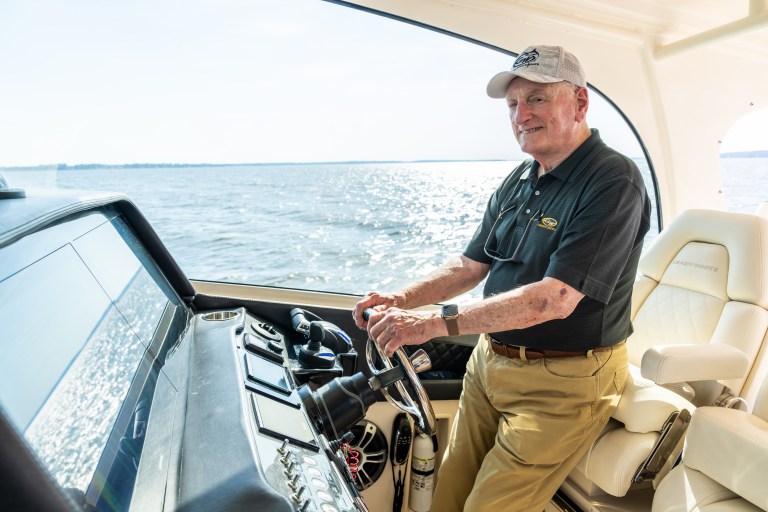
Several definitions from the P-28 standard become interesting in today’s new tech, especially as we begin to see wireless controls for engine, throttle and steering. Command station is defined as “the helm station location that is in active control.” On traditional boats with a single helm station that has a fixed wheel and throttle controls, the boat’s command station was self-evident: It was quite literally built into the physical deck structure or salon furniture. Even flybridge boats with dual helm stations had simple systems to indicate which one was active.
But what happens as we add wireless controls? Where is the operator actually located, and how do all the components in the system relate? P-28 has answers for that. Helm station is the “location from where a control system interface is installed (e.g., shift/throttle controls and steering helm).” And “control system” is “any one or combination of steering system and propulsion control systems.”
Also notable: Fail safe is “a device or feature which, in the event of failure, responds in a way that will cause no or minimal harm to other devices or danger to personnel.” And wireless is “a mode of communication, monitoring and/or control through the use of electromagnetic, acoustic or optical transmission through atmospheric space.”
P-28 recommends safe baseline relationships among these concepts and components. For example, “the control system shall become fully operational within five seconds after becoming energized at nominal voltage”; and “the control system shall become energized whenever the propulsion machinery is enabled”; and, crucially, “the control system shall have built-in redundancy accomplished by electric/electronic or mechanical means.”
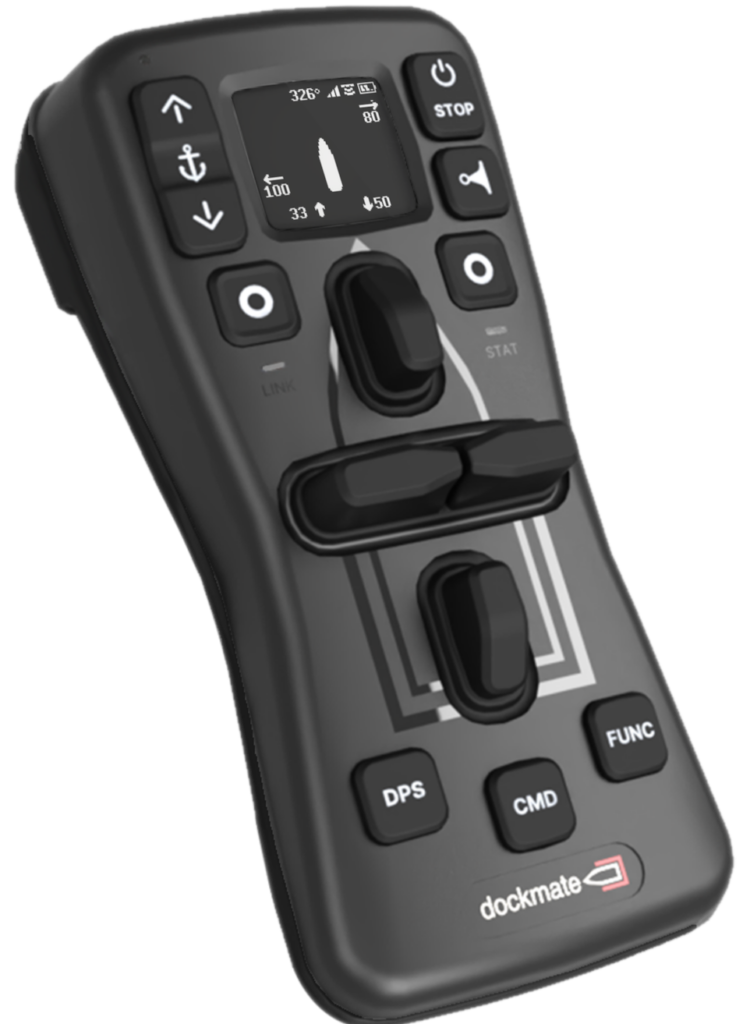
At this year’s Miami show, Dockmate Pro won the Innovation Award in the category of Propulsion Equipment & Parts. Judge Kelsey Bailey extolled its features: “With proportional lever controls, Dockmate Pro has seriously upped the game for aftermarket remote-controlled shift and throttle, faithfully re-creating a proper helm in handheld form. Even better, this new remote is wonderfully tactile, with plenty of feedback. It felt immediately intuitive.”
Behind the scenes, the Innovation Awards judges checked this and other products for compliance with relevant regulations and standards. When asked about P-28 compliance, the Dockmate reps were able to cite the recommendations listed under P-28.9 “Portable Control Units” and demonstrate compliance.
“Shall be restricted to permit use only when the maneuvering mode is selected.” Check.
“Shall be provided with a means to determine the unit’s orientation relative to the bow of the boat.” Check.
“Shall function as intended after sustaining a drop of 39.3 inches (one meter) onto a concrete floor.” Check.
“Shall be equipped with a means of preventing inadvertent change of shift, throttle, steering or transfer of command (e.g., when the unit is dropped).” Check.
Underlying the best new products — especially as we step into new technology that hasn’t existed before — are the voluntary standards designed from the start to keep our boats and our loved-ones safe.
Tim Murphy is education director at the American Boat & Yacht Council and was chair of this year’s Miami Innovation Awards judging panel.
This story originally appeared in the April 2026 issue of Soundings Trade Only magazine.