
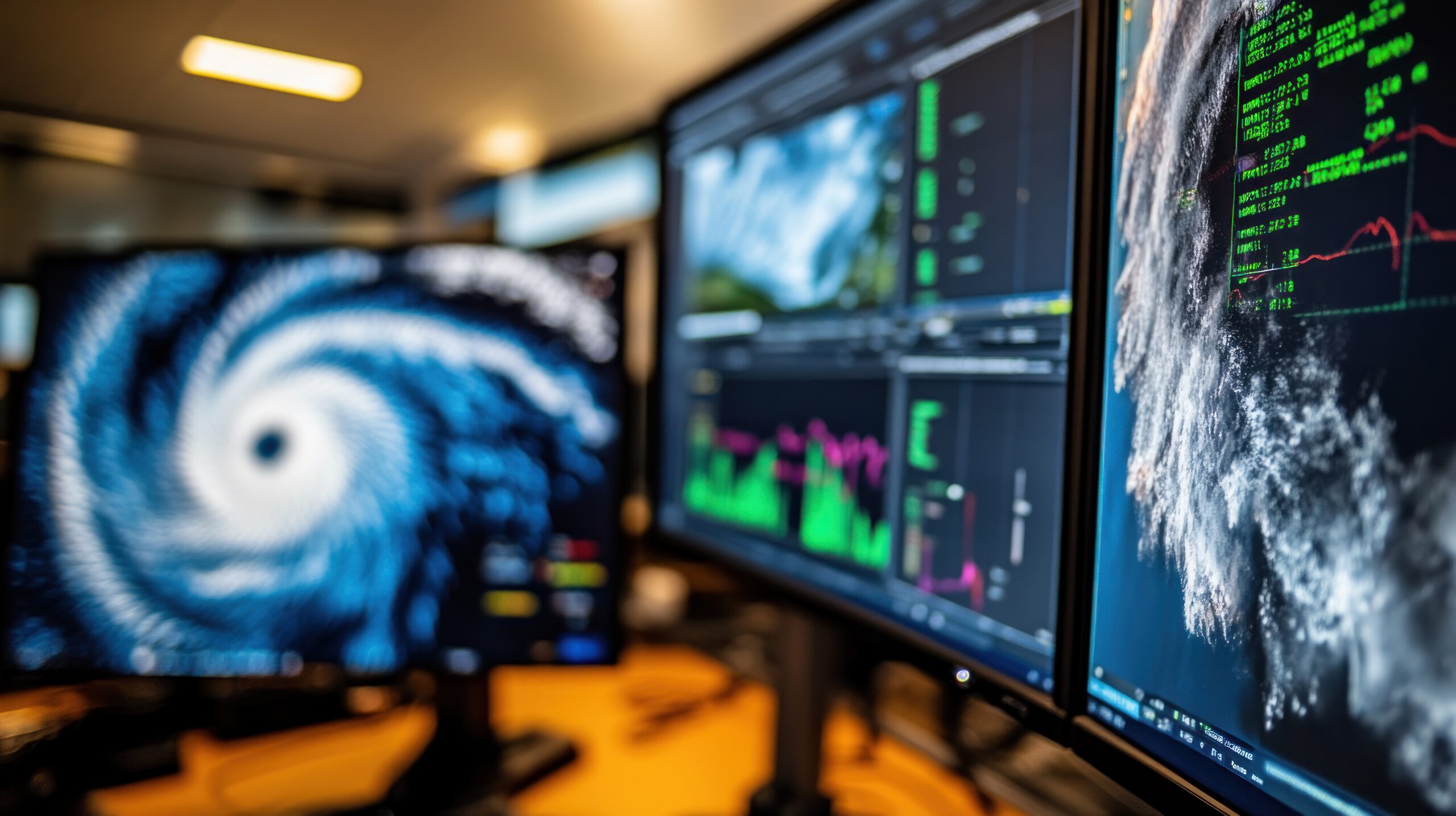
It’s been a busy year for machine-learning researchers making strides in the world of weather forecasts. Back in December, Google unveiled GenCast, an AI model used to predict day-to-day weather, as well as extreme events. Google’s announcement said GenCast’s forecasts were better than what is commonly known as the “European model,” which has been heralded ever since it accurately predicted the unusual path of Superstorm Sandy.
Then, in May, Microsoft announced Aurora, an AI system the company said can also predict hurricanes faster and better than traditional forecasting tools. And in July, the European Centre for Medium-Range Weather Forecasts — the place that creates European-model forecasts — announced that its Artificial Intelligence Forecasting System had gone into operation. That AI system is now running side-by-side with the traditional, physics-based Integrated Forecasting System for weather prediction, advancing from the ability to run a single forecast at a time to being able to produce a collection of 51 different forecasts with slight variations at any given time.
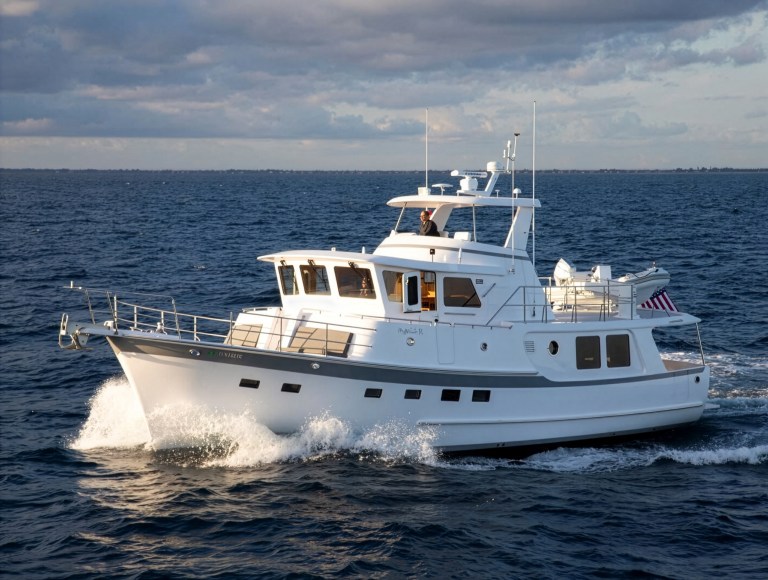
These AI-based models are using a new method of thinking about storm predictions — a method that will likely make its way into systems that boaters already have on board and use to judge the weather. In theory, the AI advancements should ultimately help to make weather forecasting better for everyone.
“When I went to meteorology school, we had to learn all these physics equations that they run on supercomputers now. The AI models don’t use those equations,” says Matt Rogers, president of the weather risk-management firm Commodity Weather Group. “They train on 20, 30, 40 years of history and work on pattern recognition. They say this has happened before, or something close to this happened before, so this is what’s going to happen next.”
For now, Rogers adds, nobody is ready to rely entirely on machine-learning tools. His company deals with forecasts that can affect things like oil rigs in the Gulf of Mexico, and he says what exists in the AI world right now is not exactly as advertised. “There’s some value to them, and it’s another tool in the toolbox, but that’s it,” Rogers says. “As far as I can tell, these models are being a little overpromised at this point. Otherwise, everybody would be using them.”
Announcements about these machine-learning tools come amid headlines about the future of storm prediction in the United States, and how the government agencies that do it will be funded and staffed. As of this writing, proposed budget cuts at the National Oceanic and Atmospheric Administration were being debated, and NASA had extended its planned use of a satellite feed that hurricane forecasters use to determine storm intensification. Both of those situations, as well as other possible changes related to government staffing and operations, were an ongoing conversation in Washington, D.C.
Microsoft’s Aurora announcement specifically mentioned that the AI model could potentially produce “forecasts that outperform the current operational systems at a fraction of the cost.” Google’s announcement said that its system offers “greater value” than some traditional modeling “when making decisions about preparations for extreme weather, across a wide range of decision-making scenarios.”
And that’s before the AI systems reach their full potential. The team behind Aurora explained on a podcast that they know the model can be improved but stressed that what they had done is prove the AI model works. “We really want to emphasize that Aurora only scratches the surface of what’s actually possible,” says Microsoft’s Megan Stanley.
That is Rogers’ take, as well, that there is improvement yet to be made in the machine-learning models. He says what the AI researchers accomplished is a significant step because it’s a different way of thinking about forecasts. At the same time, though, the systems are not yet ready to serve as replacements for traditional forecasting tools.
“If there’s a debate about whether a storm will come up the East Coast or go out to sea, they’ll do that better than the traditional models,” he says. “But if the question is whether it’s going to be a Category 2 or a Category 4, they’re not as good at that.”
As an example of why that may be happening, Rogers says, the National Hurricane Center flies planes into storms to gather data that informs traditional forecasts. The AI models don’t have that data, or all of the other data that traditional forecasting generally includes. “One of the issues with AI models is that they’ve been trained on a subset of weather variables. It’s maybe 25% of all the variables that the traditional models have,” he says. “There’s been some talk about using kind of a hybrid approach, to use the strengths of each one.”
Rogers also says that based on his discussions with some of the AI modeling teams, there appears to be good potential for using the machine-learning tools to create more customized forecasts — perhaps for a specific marina or even a pier, with the ability to add local variables such as wind and current. “One of the challenges with traditional weather modeling is that they target the main cities where there’s historical data. They don’t have things like the data from your boat dock,” he says. “These models might be able to interpolate that better.”
Overall, he adds, what’s happening is not that AI teams are trying to replace traditional forecasting. The systems are being built in parallel, to see if machine learning is a good application for this type of work. And just as AI systems need humans to continue reporting and writing original content for the models to train on, the forecasting AI systems need existing, traditional weather models to function and improve. “The machine learning still needs the government to run its models to keep training,” Rogers says. “You can’t get rid of them. There’s still a dependency on them. It’s a symbiotic relationship.”
He also says that despite the talk of federal budget cuts and threats to forecasting services, his company has not seen significant degradation in the weather data that’s available. “There are cutbacks from the National Weather Service office — the people who communicate the weather to the public — but the actual weather models that get run in the background, they still have the priority in the background,” Rogers said at press time.
Boaters trying to figure out how all of this will play out, he says, should expect these AI systems to begin to integrate slowly into existing technology that’s already used in forecasting. He doesn’t expect boaters will have to buy new electronics to access these AI forecasting tools, but he does foresee electronics and other companies trying to determine what can be taken from the AI models and used to advance the forecasting tools that boaters have.
“I think that’s the way of the future. You’re going to see it integrated into current tools and products, using the best of each with the data,” Rogers says. “Optimistically, I guess maybe it will improve storm tracks for severe weather. You may see improvements in the years ahead at a faster pace than in the past 10 or 20 years.”
Just how fast all of that might happen, he says, depends in part on how well the AI models predict future storms: “As a meteorologist, I have to say, you’re only as good as your last forecast.”