Some boatbuilders are investing heavily in advanced manufacturing techniques to boost quality, efficiency, customer satisfaction, and employee health and well-being. These innovations are not only reshaping how boats are designed and built, but they’re also moving the industry forward.
Here’s a look at recent advancements at Smoker Craft, Twin Vee, MJM Yachts and MasterCraft, which are taking different paths to innovation and achieving goals in multiple ways.
Smoker Craft: Robotic Welding
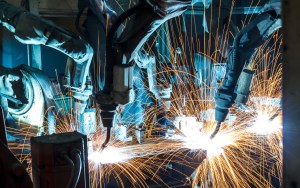
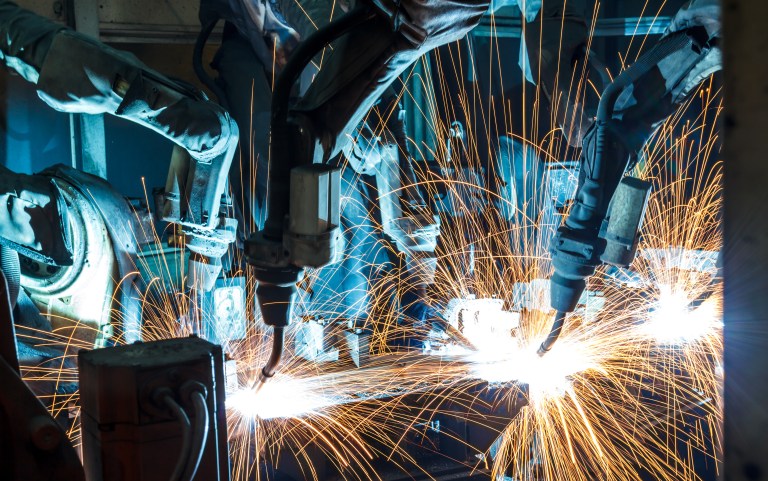
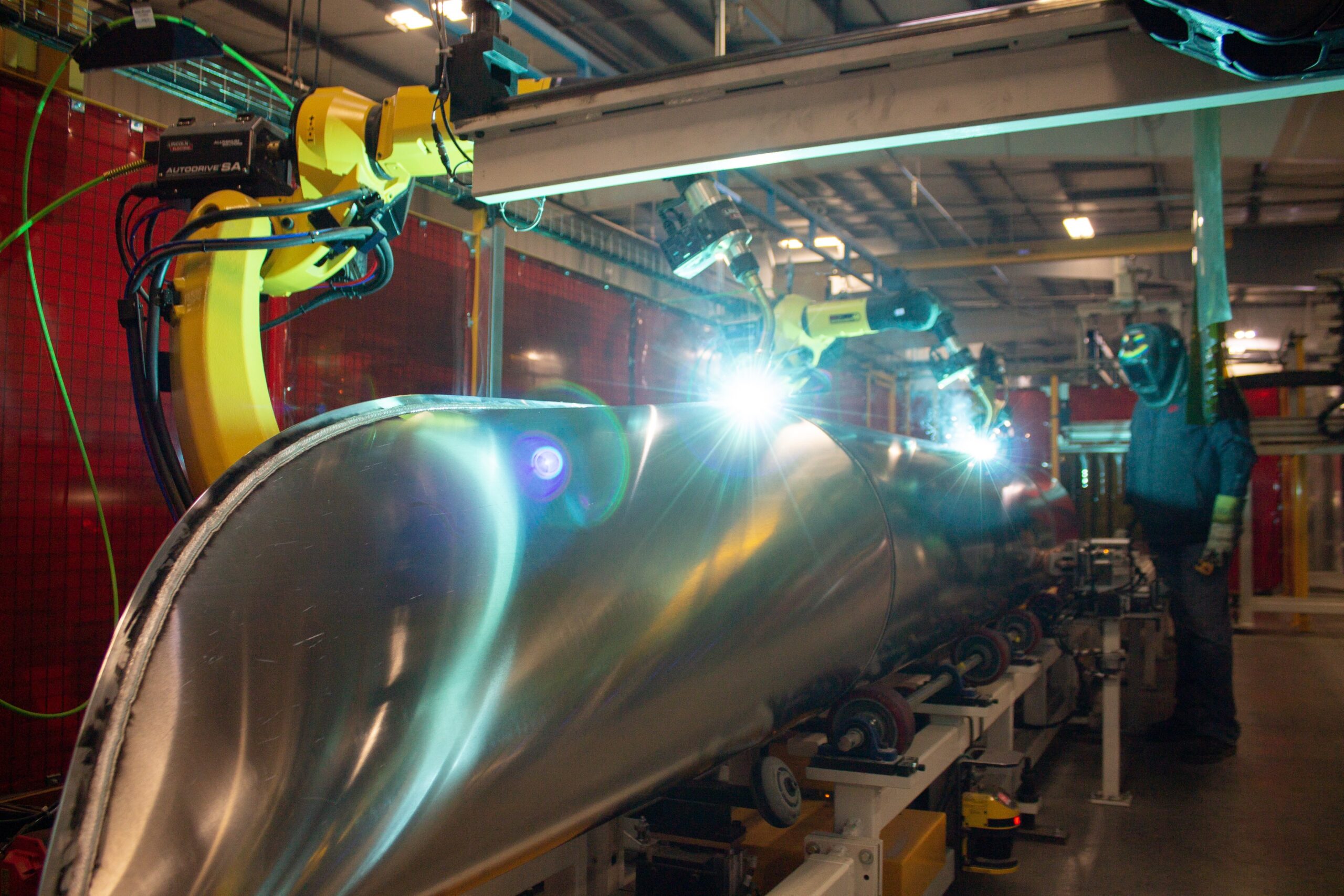
Indiana-based Smoker Craft, known for its Smoker Craft, Starcraft, SunChaser Pontoons and Sylvan brands, began integrating automated welding systems in 2023. The first serialized boats built with the process reached dealers with the 2024 model year. The move shifted how aluminum pontoon tubes are fabricated. Michael Boyle, Smoker Craft’s continuous improvement manager, says the investment has already started paying dividends in quality, efficiency and workforce sustainability.
“Welding is an art,” Boyle says. “Just as every artist has a unique style and technique, so do welders. The introduction of robotic welding has allowed us to take control of all those unique aspects and make sure we have a weld that not only meets our structural and aesthetic requirements, but remains consistent day after day.”
Automated welding systems ensure that each seam meets structural and cosmetic requirements without the variability that can come with manual techniques. For boats, which are constantly exposed to stress, vibration and water intrusion, eliminating weak points in the welds translates into improved structural integrity and longer service life.
Boyle says production efficiency has improved dramatically. Boats move through the plant faster, allowing Smoker Craft to keep pace with demand while reducing overhead. “Our automated lines have reduced cycle times by nearly 80%,” he says. “This led us to reduce [work-in-progress] and increase labor efficiency, but it also reduced the manufacturing footprint needed to produce the same product.”
Like most manufacturers, Smoker Craft faces challenges recruiting skilled welders, particularly in rural Indiana. Rather than displacing existing workers, automation has allowed the company to redeploy them into roles that are less physically demanding and longer-term.
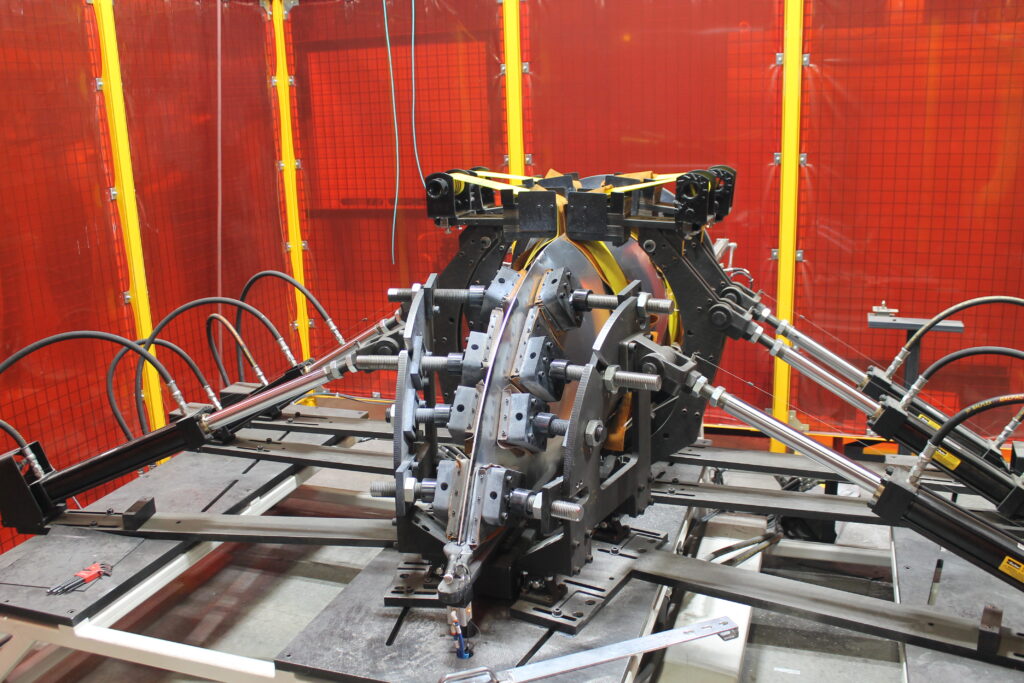
“The goal from the start of this project was to increase our production volume, not to replace our current operations but rather complement what we were already accomplishing,” Boyle says. “Some portions of the automation did, in fact, allow us to remove operators from labor-intensive positions that were hard on their bodies, and redeploy and upskill them to run the cells. This has significantly reduced the turnover in those positions, as well as increased the quality of life for those operators.”
Boyle says robotic welding also has cut down on scrap, reduced rework and lowered warranty claims. It also required changes in design and production planning. “The amount of refinement that went into our product to make the automation line successful has had an overwhelmingly positive impact on quality across all our lines,” he says. “It also allowed operations further downstream to become more standardized and consistent, opening new doors that ultimately lead to providing a better product to our customers.”
Twin Vee: Innovations and Expansion
Twin Vee produces high-performance power catamarans for offshore anglers and boaters. CEO Joseph Visconti says innovations in wiring systems and vacuum-infusion technology, along with a multimillion-dollar plant expansion, are all critical to current quality and long-term growth.
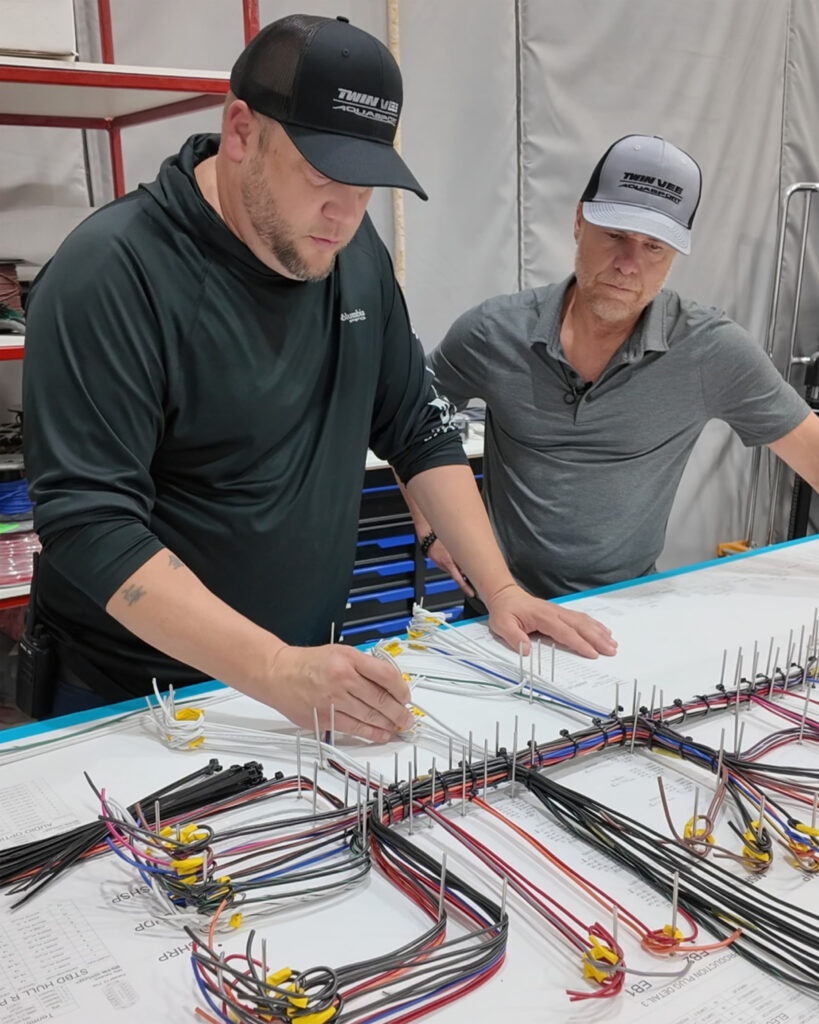
“Wiring harnesses and infused hulls are two areas where we’ve invested heavily because they make the customer experience better and the boat more reliable over the long haul,” he says. “As we scale, these systems give us the foundation to build more boats without sacrificing quality. That’s how you build a brand that lasts, one system at a time.”
Wiring, in particular, can determine whether a boat performs reliably years down the line, he says. Twin Vee engineers and builds every harness in-house on custom-designed boards, ensuring that each connection is consistent, labeled and routed for future service. That approach means less troubleshooting, easier maintenance and a higher standard of workmanship. “It’s the difference between spaghetti wiring and a system that looks and functions like it came from aerospace,” he says.
Keeping the wiring production in-house also improves efficiency. “If you outsource wiring, you’re at the mercy of suppliers’ timelines, and you lose control of quality,” Visconti says. “By building everything here, our rigging team can plug-and-play complete, pretested harnesses. There’s no guesswork, no rework and no chasing down bad connections after the fact.”
On the composites side, Visconti highlights the use of vacuum infusion to ensure consistency in hulls. The process pulls resin evenly through the laminate under vacuum pressure, creating a stronger, lighter hull. “Vacuum infusion is all about precision and consistency,” he says. “The boat built on Monday will be the same as the one built on Friday. For the customer, that means a boat that performs better offshore, with greater fuel efficiency and structural integrity.”
Infusion also reduces emissions and improves workforce safety, he says, by eliminating much of the grinding and rework associated with older methods. “Once that bag is sealed, the chemistry and the vacuum do the work,” he says. “Our crews spend less time grinding, repairing voids or chasing cosmetic issues, and more time finishing boats at a higher standard. It’s cleaner, safer for our people, and the end product is superior.”
Twin Vee’s development of more in-house fabrication has been implemented along with the significant expansion of its Fort Pierce, Fla., facility that broke ground in 2023 and was completed this year. The $3.5 million project increased manufacturing footprint by 30% and added CNC and infusion systems to the production line.
“The decision was driven by two clear market signals: demand for larger, higher-performance power cats, and a steady shift from entry-level boating to premium, offshore-capable boats,” Visconti says. “Our long-term growth strategy is to scale responsibly while broadening product offerings and improving efficiency.”
The expansion also positions Twin Vee to integrate its acquisition of Bahama Boat Works into the Fort Pierce plant. The company can increase volume on existing models while launching new Bahama offerings. “The expansion was underway before we closed on Bahama Boat Works, but it positioned us perfectly for that acquisition,” Visconti says. “Our plan is to transition Bahama production into our Fort Pierce facility, where we can leverage scale, workforce and technology.”
Visconti says he expects the expansion to add 50 to 75 skilled jobs over the next two years, strengthening partnerships with local suppliers and boosting Fort Pierce as a regional marine hub. “We see the facility as an anchor for long-term economic growth in this community,” he says.
Twin Vee has also diversified suppliers, negotiated long-term contracts for critical components, and expanded in-house capabilities to reduce exposure to external shocks. “Risk is always part of the equation, but the investment in vertical integration and advanced production capabilities makes us more resilient,” Visconti says.
MJM Yachts: AIMS System
MJM Yachts builds high-performance yachts that blend Down East styling with advanced composite construction. The company uses the AIMS quality control system, a cloud-based platform, to provide real-time visibility into every stage of the build process. “Integrating AIMS into our quality-control framework is another step forward in delivering the unmatched reliability and performance our owners expect,” says president and CEO Natascia Hatch. “This system empowers our team to take a proactive approach to quality, ensuring every yacht leaves our facility in perfect condition.”
The AIMS platform — short for Advanced Integrated Manufacturing Solutions — is woven into MJM’s build process. Every step, from composites infusion to sea trials, is logged and tracked. The system records inspection results, compliance checks and corrective actions in real time, giving managers complete transparency into how each boat is progressing.
Matt Saloom, chief operating officer at MJM, says AIMS was implemented in the second quarter of 2022, replacing a mix of Excel files and paper records. “All data is cloud-based, so with an internet connection, we can access inspection data from anywhere,” Saloom says. “AIMS also allows us to create custom reporting that auto-generates when we want, while alerting team members of important data they may need. Real-time inspections with real-time data are a game-changer.”
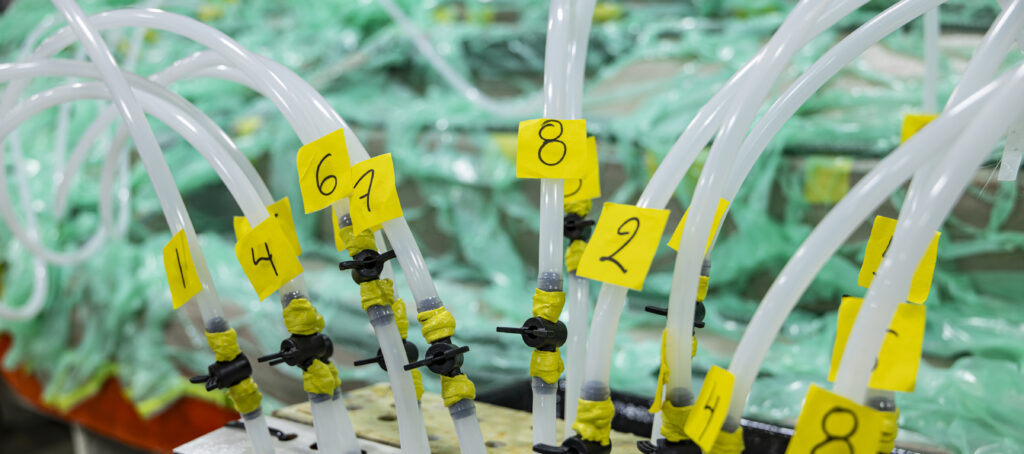
AIMS is produced by Aimsco in Chapel Hill, N.C. The system provides detailed insights into recurring issues, allowing MJM to prevent defects and continuously improve the build process. There also are functions such as e-checksheets, variable data collection, pass-rate measurement and severity-rate tracking.
AIMS also helps MJM ensure compliance with National Marine Manufacturers Association standards and other regulatory requirements. By capturing and archiving inspection data, MJM can demonstrate that every yacht has passed rigorous checks before delivery.
The investment in AIMS was about $25,000 upfront, Saloom says. It took four months to bring four models up to speed on the system, with ongoing costs limited to an annual subscription that includes 24/7 support.
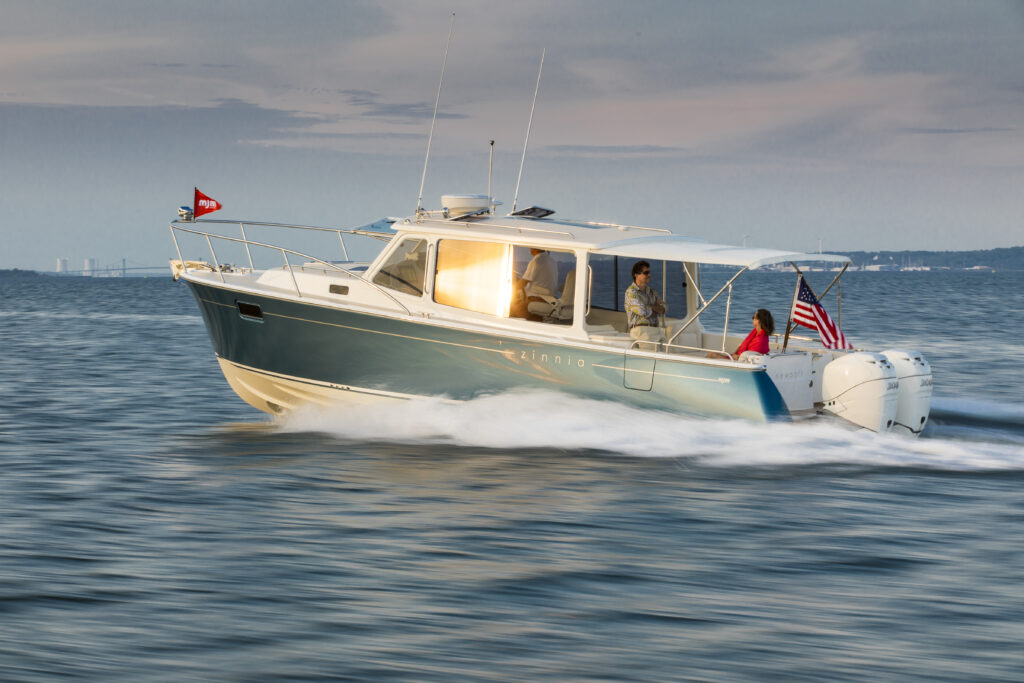
Eddie Godley, MJM’s quality control manager, oversees the platform internally. He says MJM can tailor the software to its production needs while ensuring data security. “MJM Yachts’ data is our data and not shared with anyone else,” Godley says.
MasterCraft: CNC Waterjet
In early 2023, MasterCraft integrated a CNC waterjet robot into its production line. Kevin Boyer, engineering manager of manufacturing, and manufacturing engineer Matt Goertz say the impact has been transformative.
MasterCraft partnered with an automation company in Michigan in early spring 2022 and received the CNC waterjet robot by January 2023. Within weeks, the company had produced the first production-intent part and had begun programming more small parts for the system.
Since then, the machine has processed more than 3,600 parts, from small, precision components to complex perimeter cuts. The engineers say the team focused heavily on overcoming early challenges, such as part-to-fixture and thickness variances, by refining touch-off procedures. The result is a process that delivers consistent accuracy across multiple material types.
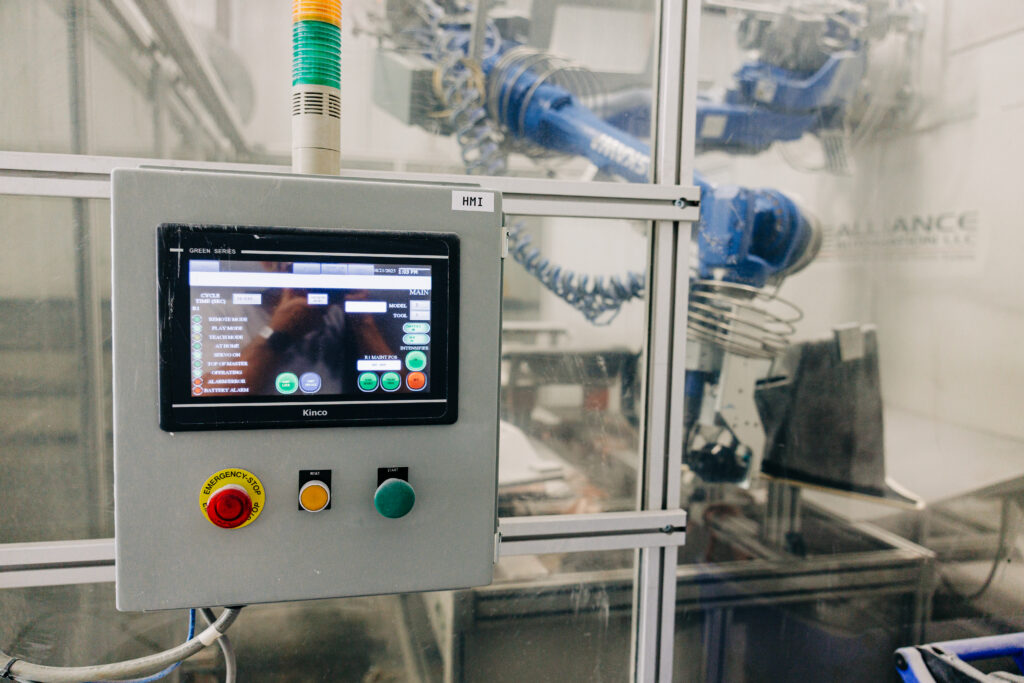
A key advantage of waterjet cutting, they say, is how it preserves the integrity of marine-grade metals and composites compared with more traditional techniques. It uses a high-pressure stream of water, often with abrasive particles, to cut materials without generating significant heat. In contrast, plasma or laser cutting produces heat, which can alter the microstructure of materials, cause warping or embrittlement, and damage resin matrices in composites.
Waterjet cutting also produces minimal kerf and smooth edges, reducing or eliminating the need for secondary machining. And plasma or laser cutting can release harmful fumes when cutting composites, especially ones with resins or coatings. Waterjet cutting, Boyer and Goertz say, avoids combustion or melting, making it safer for operators and better for the environment.
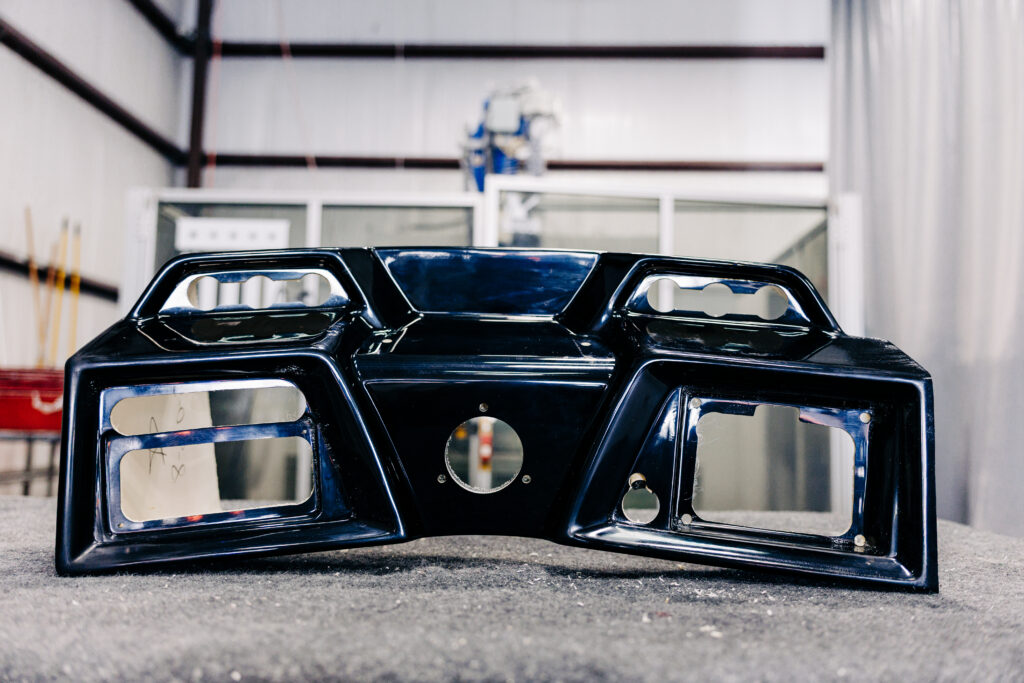
The move has also unlocked new design flexibility. Where builders once relied on angle grinders or drill bits, the CNC waterjet can produce precise holes ranging from 3/32 of an inch up to the limits of the work cell, with true-to-size accuracy. That allows for the creation of complex ovals, vendor-specific patterns and angled perimeter cuts that more closely match engineering intent, they say.
The system requires only one operator, allowing MasterCraft to reallocate two of the five original cut-and-grind team members to other critical areas. Improved safety has been another major benefit. Dust elimination enhanced air quality, reduced the need for heavy personal protective equipment, and improved overall working conditions, they say. Cycle times have also dropped, further tightening production schedules.
While MasterCraft has not run limited-edition or one-off production builds on the waterjet, the groundwork has been laid. Teams have implemented revision logs for robot jobs, letting them revisit and reproduce past versions as needed. They can quickly modify existing programs, and they’ve already completed several internal side projects with minimal effort, the engineers say, adding that the company is well-positioned to handle custom or one-off builds without disrupting production.
Their current system handles various glass fiber materials with ease and produces high-quality cuts, even through reinforced areas like phenolic and HDPE in their dashes, the engineers say. They maintain quality by slightly slowing robot movement in reinforced sections, though higher pressure could eliminate that need.
The MasterCraft engineers are confident that given the precision and clean cuts waterjets deliver, they’re fully capable of producing high-quality parts from advanced composites.