
One of the slogans that Clinton presidential campaign strategist James Carville famously preached in 1992 to keep campaign workers on message was: “It’s the economy, stupid.” The phrase was born out of a short-lived recession driven by, among other factors, stubborn unemployment and record oil prices. I’ve been thinking a lot about that catchphrase lately, and not for the reasons you might think.
When I jumped into the deep end of the pool here at Soundings Trade Only in January 2022, the marine industry was riding a copacetic high of record boat sales, lengthy order books, the availability of cheap money and an unprecedented interest in our sport among new boaters. The big story was the hordes of people whose Covid strategy was to get outside and socially distance, using brand-spanking-new boats to take them where humans were scant and the scenery was delightful. Despite lockdowns, sky-high unemployment, supply-chain nightmares, boat and trade show cancellations, and an acutely hostile political environment, if you were in the U.S. outdoors economy in late 2021 to early 2022, you likely enjoyed some of the best financial times in decades.
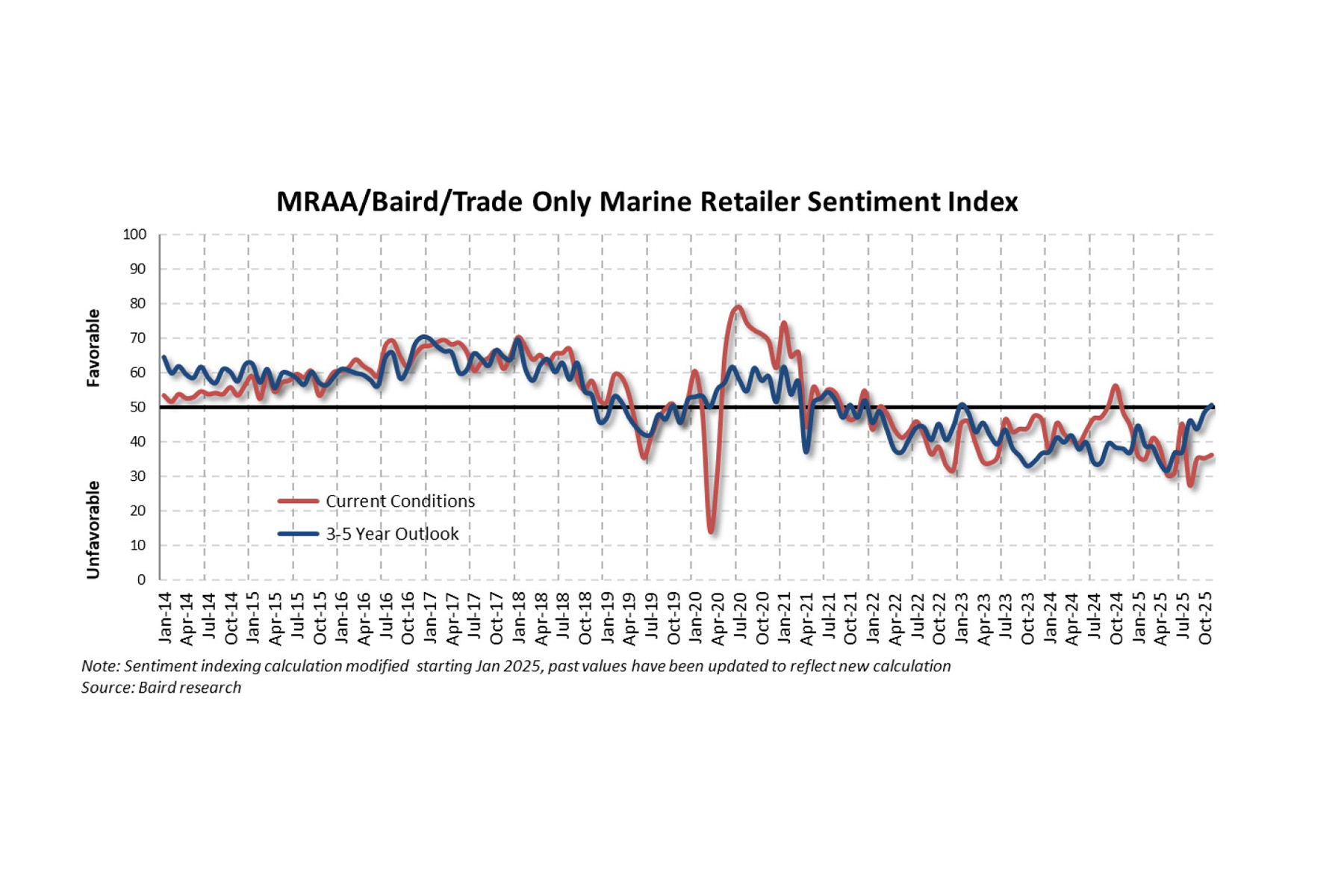
Still, smoke signals foreshadowed a downturn. Inflation was on the rise. Consumer confidence dipped. New-boat registrations faltered. Boatbuilder order books began to shrink. New-home sales declined. By summer 2022, talk of the Covid bubble bursting was no longer whispered in private; it was loudly discussed at trade shows and written about in this magazine.
In December, dealership owners at the Marine Retailers Association of the Americas’ Dealer Week said they were carrying too much inventory, returning to floorplan financing and seeing frustrated sales staffs that had to return to real selling. I asked a few of the dealership owners what they were doing about these challenges. One owner invested in sales training for his team and did a thorough eyes-on review of his operation to see where improvements could be made to facilities. Another said he was examining the mix of products he was carrying. Yet another said he was reading a business leadership self-help book.
Anything obvious missing here?
That’s right: the customer.
I’ve worked several stints at outfits that not only understood the importance of serving prospective customers with panache, but that also ensured the customers came back again, and again, and again. One of these outfits was a large sailboat dealership, but the place where I learned the most about keeping customers happy and getting them to return was at Apple Inc.
Of course, boats are different from an iPhone or an iMac, but the basics of treating people with respect and going the extra mile to make them happy — better yet, trying to awe them — apply to just about anything that’s bought or sold. While this concept seems basic, I’ve talked to friends and family recently who were less than happy with their experiences in the recreational boating space during the past year.
A common complaint was being promised something that could not be delivered on time. At Apple, we were taught to under-promise and overdeliver. Instead of immediately placating the customer with a delivery date we knew could not be met, we laid out the truth. The repair or item or service often arrived ahead of our pessimistic prediction, and this almost always delighted the customer.
Another thing I heard from my unscientific focus group was that they did not feel like their dealership or marine shop cared about them when they complained about a service issue or part delay. The Apple way to handle this is to agree with the customer, no matter how difficult doing so can be, especially with a raging customer. Even the angriest customers are almost immediately defused when you simply agree with them by saying something like: “Yep, I’d be awfully angry if someone promised me an outboard part I needed for a family vacation and didn’t deliver it on time.”
Once the customer is defused, you can get to the real problem and the work of fixing it without having the customer screaming at you.
Seriously, try it.
The last thing we often did was propose a solution that cost the company money, such as taking back an item outside the return date or agreeing to fix a product outside of warranty. We called this tactic “shock and awesome,” and our customers loved it. Post-conflict, I frequently saw these once-angry customers back in our store buying a new product.
Developing customers who love you is a long game, not a short grab for profits. Dealers are right to be concerned about headwinds the industry is facing, but everyone at dealerships still must maintain focus on the customer experience. If even half the customers who bought boats at your dealership in the past two years return, they’ll not only reward you with loyalty and additional sales, but they’ll also likely tow along some of their friends to see you about a boat, too.
Put another way: It’s the customer, stupid.
This article was originally published in the June 2023 issue.